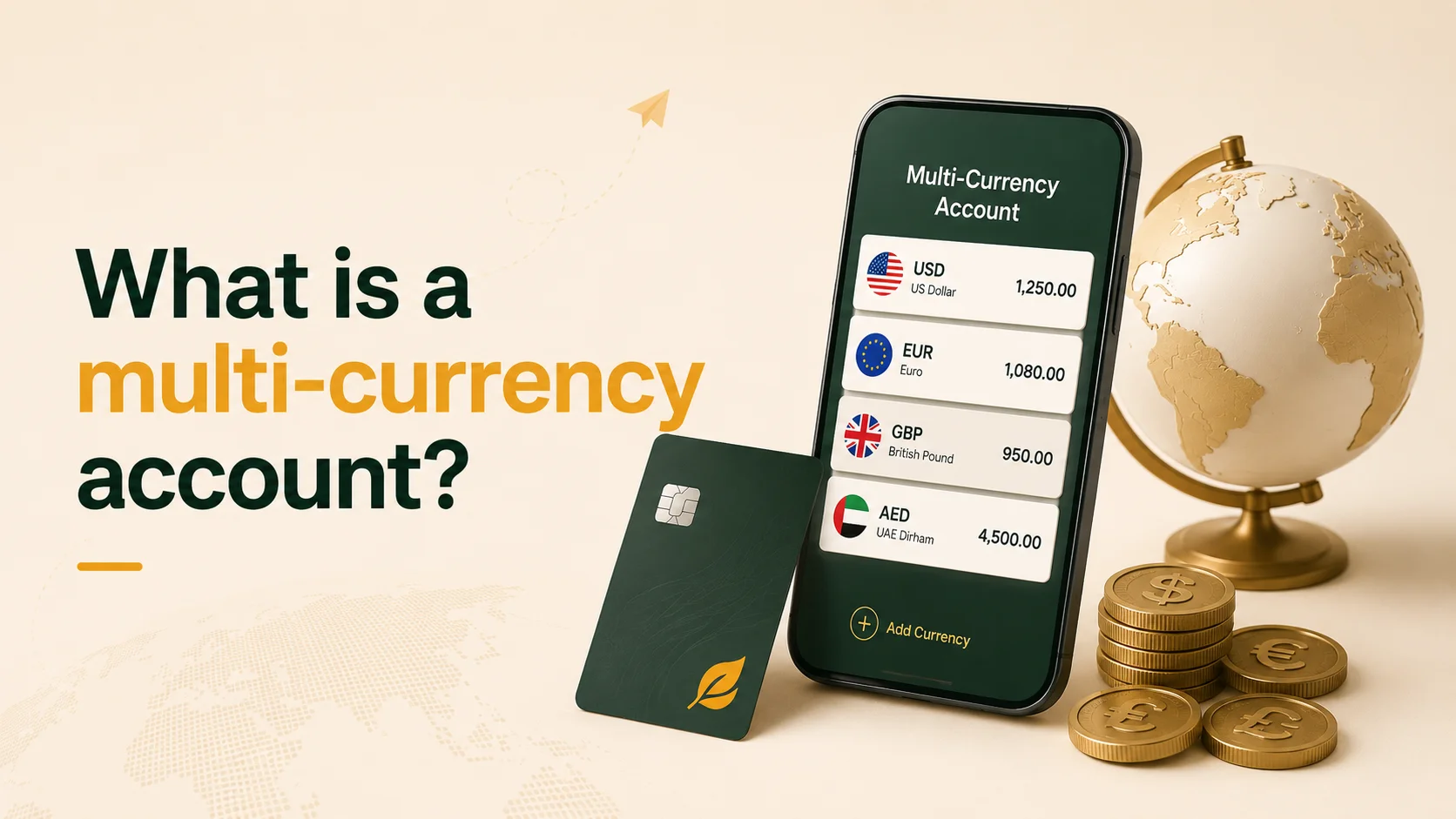
A multi-currency account lets you hold, send, and receive multiple currencies from one place. Instead of converting money every time you get paid, travel, shop, or send money abroad, you may be able to keep different currency balances side by side.
For example, you may hold USD, EUR, GBP, AED, or other currencies, depending on the provider. Some companies call this a digital multi-currency account. Others may use terms like multi-currency bank account, international currency bank account, foreign exchange account, or multi-currency savings account.
The idea is simple: more people now live across borders. They earn in one currency, support their families in another, and deal with exchange rates more often than they should.
How does a multi-currency account work?
A multi-currency account gives you separate balances for different currencies. If you receive USD, you may be able to keep it as USD. If you need EUR later, you may convert part of your balance. If you want to send AED, you may convert and send when the rate makes sense for you.
The exact features depend on the provider. Some accounts are made for travel. Some are made for freelancers. Some are made for people who receive international payments. Some are offered by banks, while others are offered by neobanks or financial technology companies.
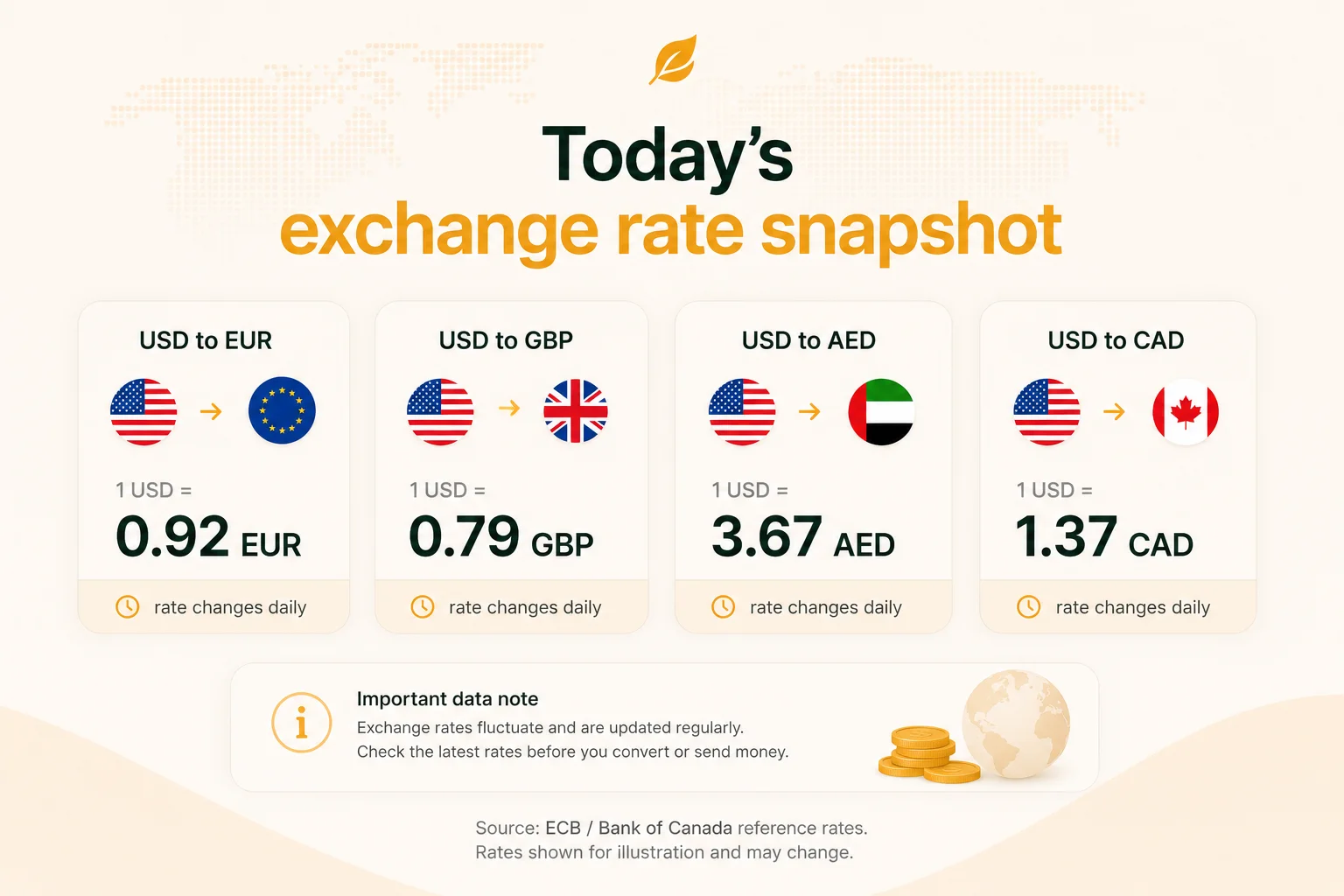
You do not have to convert every payment right away. You can hold a currency, watch the rate, and choose when to exchange. Exchange rates still matter. Currency values are set in the foreign exchange market, where currencies are bought and sold. The rate a provider gives you may not match a market reference rate.
What can you use a multi-currency account for?
A multi-currency account can help when your finances span more than one country.
Receiving money from overseas
If you work with clients in another country, you may need an easier way to receive money from overseas. This can apply to freelancers, remote workers, students, families, and people who get support from abroad.
A multi-currency account may let you receive funds in one currency and hold them without converting them right away. This can help if you know you will use that currency later. It can also help people who want to receive international payments without having to handle a new conversion each time.
Sending money abroad
A multi-currency account can also help when you send money abroad. If you already hold the currency you need, you may not have to convert at the moment of transfer. If you do need to convert, a good provider should show the fee, the exchange rate, and the amount the receiver will get before you send.
For remittance transfers, the Consumer Financial Protection Bureau says providers must disclose key details, including fees, exchange rates, certain third-party fees, and the amount expected to be delivered.
Holding money in another currency
Some people want to hold money in another currency because they travel, support family abroad, get paid in another currency, or plan future spending.
For example, someone may receive USD but plan to pay tuition in EUR later. Someone else may carry an AED because they often visit family in the UAE. A multi-currency account can help them avoid converting back and forth as often as needed.
This does not remove exchange-rate risk. Rates can change. But it can give users more choice over when they convert.
Travel and online spending
If you travel often, a multi-currency account can help you plan ahead. You may convert money before a trip and spend from that balance later, depending on the provider. This can be useful when you want to avoid repeated card conversions or surprise fees during the trip.
It can also help with online shopping. Many people buy from international websites, book hotels, or pay subscriptions in other currencies. A multi-currency account can make these payments easier to track.
What are the benefits of a multi-currency account?
The main benefit is simple: it helps people manage multiple currencies without turning every payment into a new problem.
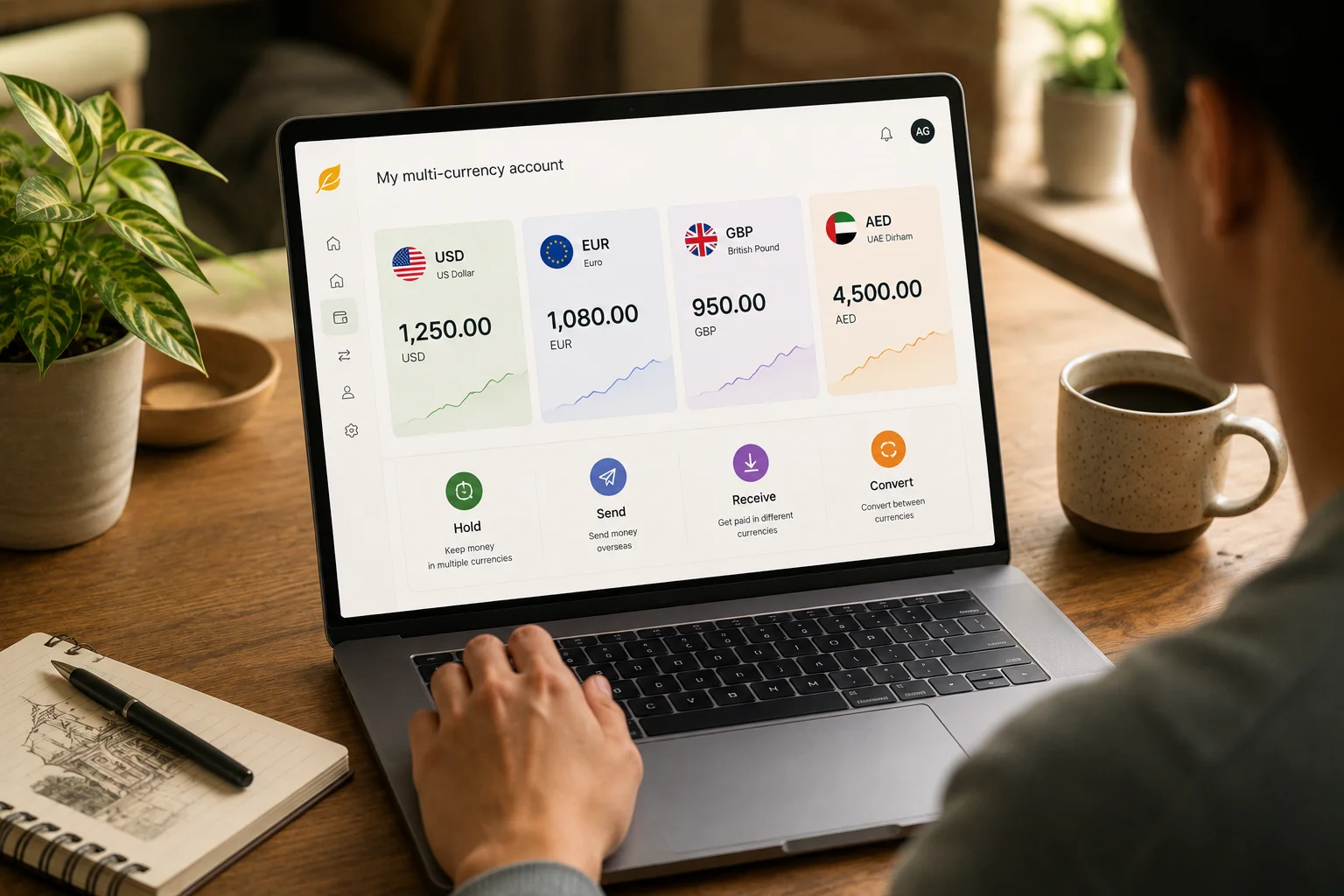
You can manage different currencies in one place
Without a multi-currency account, people may need separate accounts, apps, cards, or services for different currencies. That can get messy.
A digital multi-currency account can bring those balances into one place. You can see what you hold, what you need, and what you may want to exchange. This is useful for people who travel, work online, support family, or manage costs across countries.
You may reduce repeated conversion costs
Every currency conversion can come with a cost. Sometimes it is a clear fee. Sometimes it is built into the exchange rate. A multi-currency account may help reduce extra conversions because you can keep money in the currency you receive or plan to use.
For example, if you receive USD and later need USD again, you may not need to convert it into another currency first. This does not mean a multi-currency account is always cheaper. It depends on the provider, rate, and fees. But it can help people avoid unnecessary conversions.
You can see the costs more clearly
A good provider should show you the exchange rate before you convert or send.
The European Central Bank publishes euro foreign exchange reference rates every working day. These are reference rates, not customer rates, but they show why market benchmarks matter when comparing currency prices.
For users, the rule is simple. Look at the fee, the rate, and the final amount. That is how you understand what it really costs.
You can receive money more easily
People who work across borders often need better ways to receive money. A foreign exchange account or multi-currency tool can make this easier by letting users receive certain currencies and hold them. This can be helpful for freelancers, remote workers, families, students, and anyone who deals with international payments.
The exact receiving options depend on the provider and country. But the benefit is clear: fewer steps, less confusion, and better control.
You have more control over when to convert
With a normal account, money may be converted as soon as it arrives or when you make a payment. That may not always be the best time for you.
A multi-currency account can give you more control. You may hold one currency and convert later when you need it. This is useful when rates change or when you know future expenses are coming.
Is a multi-currency account the same as a bank account?
Not always. Some multi-currency accounts are offered by licensed banks. Others are offered by neobanks or financial technology companies using partner infrastructure. That difference matters.
A multi-currency bank account may be offered by a chartered bank. A bank-like account from a financial technology company may offer many of the same features, but it is not the same as a bank account.
Before you open a foreign currency account service with any provider, check who provides the account, what protections apply, what fees are charged, and what rules apply in your country.
What fees should you check before opening one?
A multi-currency account can be useful, but the fees still matter. Check the currency conversion fee, the transfer fee, card fees, payout fees, cash-out fees, and any monthly charges. Also, check the exchange rate. A low fee does not always mean a low cost if the exchange rate is weak.
How to choose the right multi-currency account
The right account depends on how you use money.
Check supported currencies
Start with the currencies you actually use. If you earn in USD, travel with EUR, support family in AED, or pay bills in GBP, make sure the account supports those currencies. A long currency list does not help if it misses the ones you need.
Check how easy it is to send and receive money
A multi-currency account should make international money use easier. Check whether you can send to the countries you need, receive from the people or platforms that pay you, and whether the receiver can use the money in a simple way.
Check the exchange rate
The exchange rate can change the real cost. Before converting or sending, compare the rate offered with a trusted market reference. It may not match exactly, but the difference should be clear.
Check the provider’s safety and rules
Look at who provides the service, what verification is required, and what protections apply. A provider that handles money across borders should take safety seriously. That includes identity checks, secure access, and clear rules for how funds are held or transferred.
Check if the pricing is clear
Clear pricing is not a bonus. It should be the starting point. You should see the fee, exchange rate, and final amount before you confirm a transfer or conversion. If the cost is hard to understand, that is a sign to slow down.
Is a multi-currency account worth it?
A multi-currency account can be worth it if you use more than one currency often. It can help you receive, hold, convert, and send money with more control. It can also help reduce repeated conversions and make costs easier to see.
But it is not automatically right for everyone. If you rarely travel, rarely send money abroad, and only use one currency, the benefit may be small. The value comes when your money has already crossed borders.
Conclusion
A multi-currency account is useful because money no longer stays in one place for many people. People earn, send, receive, save, and spend across borders every day.
The right account should make that easier. It should help you hold different currencies, understand the exchange rate, and see the cost before you send or convert.
Get PureFi for money transfers
PureFi helps you send money abroad for less, with clear fees and a simple way to hold and grow your money. We use new technology to make cross-border transfers faster, fairer, and more transparent.
Learn more about how PureFi can help you send, save, and grow money across borders, or download the app to get started today.