Fintech apps are changing how people use money every day. A few years ago, most people still depended on traditional banks for everything. Today, people can use one app to send money abroad, hold different currencies, use a virtual debit card, earn on savings, track spending, or get help from an AI money assistant.
That does not mean every app is right for every person. Some are better for travel. Some are better for international money transfer. Some are better for budgeting or daily spending. The point is that people now have more choices than before.
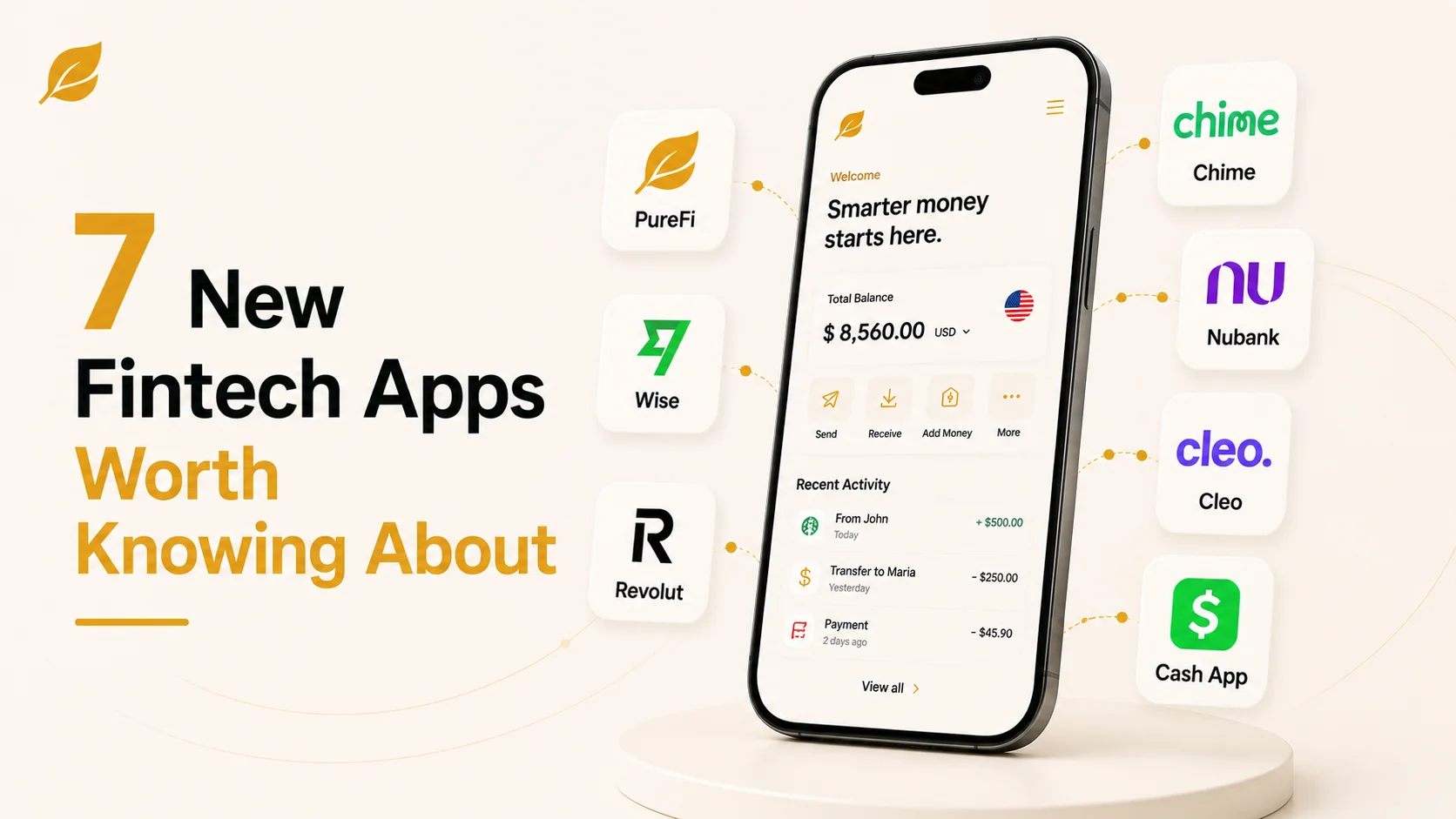
In this blog, we explore 7 fintech apps worth knowing about.
What are fintech apps?
Fintech apps are financial apps that use technology to make money easier to send, spend, save, receive, or manage.
Some fintech apps work like digital wallets. Some help with payments. Some offer bank-like services through licensed partners. Some focus on cross border payments, cards, savings, budgeting, or receive international payments features.
Many people use fintech apps because they want fewer steps, clearer fees, and faster access from their phone. The best apps make the cost easy to see. They do not make users guess what they are paying or what they will receive.
1. PureFi
PureFi is built for people who live, work, travel, or support family across borders.
It helps users send money abroad to 90+ countries, hold digital dollar value, and grow their money with clear pricing. PureFi is financial technology, not a chartered bank. It offers bank-like services through licensed technology partners, with a focus on international transfers, fair pricing, and digital dollar access.
Many people need more than a local payment app. They may earn in one country, support family in another, travel often, or want a simpler way to hold dollars. For them, the traditional system can feel expensive and hard to understand.
PureFi is designed to make that experience clearer. Users can see transfer costs upfront, send funds across borders, and use one app to manage money between countries. It also targets a 6% APY on eligible balances, though this is a variable target rate and not a guaranteed return.
PureFi is the app to know if you need to transfer money and you want clear fees, digital dollar access, and a more fair way to grow your money.
2. Revolut
Revolut is one of the most well-known fintech apps in the world. It started as a travel card app and has grown into a broad money app with cards, currency features, savings, investing, and other services.
Revolut says it has 75 million customers globally, and recent reporting describes it as a major fintech with services ranging from card spending to crypto and stock investing.
Revolut is useful for people who travel often, spend in different currencies, or want many financial features in one app. It can be a strong option for users who want card controls, currency exchange, and app-first banking features.
The main thing to check is pricing. Revolut features, limits, and fees can change by country and plan, so users should review the details before relying on it.
3. Wise
Wise is known for clear international transfers and multi-currency features.
The Wise app helps users send, receive, spend, and hold money across borders. Its Google Play listing says Wise supports money use in 145+ countries and 45+ currencies, though available products depend on where the user lives.
Wise is popular because it focuses on transparent currency conversion. That makes it useful for travelers, freelancers, immigrants, and people who regularly manage more than one currency.
Wise is a strong app to know if your main need is a digital multi-currency account, clear exchange rate information, or international transfers.
4. Cash App
Cash App is one of the most common payment apps in the US.
It lets users send and receive money, spend with the Cash App Card, save, invest, and buy bitcoin. Cash App also says its card has no hidden or monthly fees and offers real-time transaction alerts.
Cash App is useful for people who want quick peer-to-peer payments, simple card spending, and everyday money features in one app.
It is not mainly built for international transfers or receive money from overseas use. But for domestic payments and day-to-day spending, it remains one of the fintech apps people should know.
5. Chime
Chime is a US-focused fintech app built around simple, low-fee banking features.
Chime offers checking, savings, early pay access, real-time alerts, auto savings, and customer support. Chime also makes clear that it is a fintech company, not a bank, and that banking services are provided through partner banks.
Chime is useful for people who want an app-first way to handle daily spending and savings. It is especially known for early direct deposit, fee-conscious banking, and simple account features.
It is not the right app if someone mainly wants global payments or an international money transfer platform. But for US users who want a digital-first daily account experience, Chime is still one of the major names.
6. Nubank
Nubank is one of the biggest digital financial services companies in the world, especially in Latin America.
Its Google Play listing says Nu serves over 105 million customers across Brazil, Mexico, and Colombia and is the world’s largest digital financial services platform outside Asia.
Nubank is known for making financial services simpler and easier to access. Its app covers account features, payments, cards, savings-style tools, and other services depending on the market.
7. Cleo
Cleo is different from most apps on this list because it is built around AI money help. Cleo tracks spending, helps users set goals, and gives feedback on money habits. Its website describes it as an app that “talks back” and helps users understand spending patterns.
Cleo fits the rise of AI banking apps. People do not only want a place to store money. They want help understanding where their money goes and how to make better choices.
Cleo is useful for users who want budgeting support, spending insights, and a more conversational way to look at their finances. It is not a replacement for a full bank account or a cross-border payment app, but it is a good example of how AI is entering personal finance.
FAQs
What is the best fintech app?
The best fintech app depends on what you need. PureFi is useful for people who send money abroad and manage money transfers across borders. Wise is strong for currency conversion. Revolut is useful for travel and many app features. Chime is better for US daily banking. Cleo is better for AI budgeting help.
Are fintech apps the same as banks?
Not always. Some fintech apps are banks, while others are financial technology companies that offer bank-like services through licensed partners. Users should check who provides the service, what protections apply, and what fees are charged.
Are fintech apps safe to use?
Many fintech apps use identity checks, security controls, and regulated partners. Still, users should check the provider’s terms, fees, account protections, and country availability before using any app for important payments or savings.
Conclusion
People want money to be easier to use, easier to understand, and less expensive than the old system. The best fintech apps help them solve this problem.
The digital platforms that win will be the ones that keep pricing clear, reduce extra steps, and help people keep more of what they earn.
Get PureFi for money transfers
PureFi helps you send money abroad for less, with clear fees and a simple way to hold and grow your money. We use new technology to make cross-border transfers faster, fairer, and more transparent.
Learn more about how PureFi can help you send, save, and grow money across borders, or download the app to get started today.