A currency conversion fee is one of those costs people often notice too late. It can show up when you use your card abroad, buy from an international website, withdraw cash while traveling, book a hotel in another country, or send money abroad. Sometimes it appears as a clear fee. Other times, it is built into the exchange rate, which makes it harder to spot.
That is why “no fee” does not always mean “no cost.” People should be able to see what they are paying before they confirm a payment or transfer. You don’t need to be a currency expert. You just need to know where the extra cost can hide, how to check the rate, and what final amount the other person will receive in international payment.
What are currency conversion fees?
A currency conversion fee is the cost of changing one currency into another.
For example, if your account is in U.S. dollars and you pay for something in euros, your card or provider must convert the amount. That conversion may come with a fee, a weaker exchange rate, or both.
Currency conversion fees can apply when you travel, shop online from another country, use an ATM abroad, pay an overseas merchant, or make an international money transfer. The fee may be shown as a line item. It may also be reflected in the exchange rate. That second one is harder to see, but it can still reduce the value you get.
Where do currency conversion fees show up?
Currency conversion fees can show up in more places than people expect. They can appear when you pay by card in another country, or when you shop from an international website, even if you are sitting at home. A subscription, travel app, hotel site, or online store may bill in another country or currency.
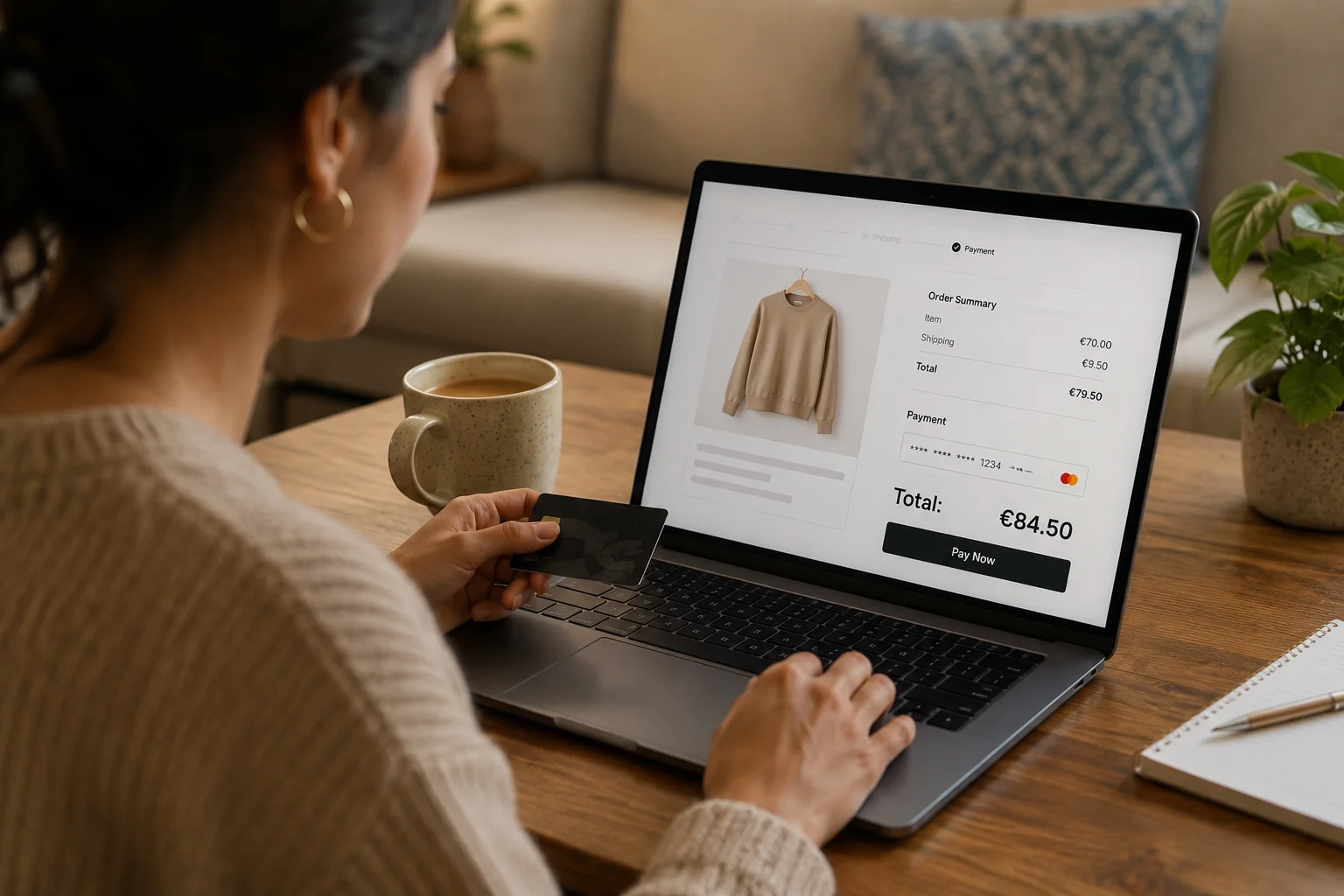
You may also pay a conversion cost when you withdraw cash from an overseas ATM. The ATM provider may offer to convert the amount into your home currency. That can feel helpful, but the rate may not be the best one. And of course, currency conversion costs can appear when you send money abroad. The transfer fee may look small, but the exchange rate can still reduce the amount the recipient receives.
The World Bank says the global average cost of sending remittances is 6.36% of the amount sent. That cost can include transfer fees and exchange-rate margins, depending on the route and provider.
Why do currency conversion fees feel hidden?
Currency conversion fees feel hidden because people are trained to look at the visible fee first. A provider may show a $0 transfer fee. A card machine may show the price in your home currency. An ATM may say it can “lock in” the conversion for you. The problem is that the real cost may be embedded in the rate.
Let’s say the fair market rate is close to $1 = 3.67 AED, but your provider gives you $1 = 3.62 AED. On a $500 transfer, that difference is 25 AED. It may not look like a fee, but the receiver still gets less. That is why the final amount matters. It shows what the other person actually receives after the rate and fees are applied.
How to avoid currency conversion fees
You may not be able to avoid every conversion cost. If one currency has to be converted into another, someone may charge for that service. The goal is to avoid unnecessary fees and unclear markups.
Check the mid-market exchange rate first
The mid-market exchange rate is the market reference rate between two currencies. It gives you a fair starting point before a provider adds its own margin. You can check a trusted currency source before paying or sending money. The rate you get from a provider may not match, and that’s normal. But the gap should make sense.
The Bank of Canada explains that its exchange rates are indicative rates derived from price quotes provided by financial institutions. These are not always the precise rates people get from providers, but they can help users understand the market rate.
Pay in the local currency when traveling
When you pay abroad, a card machine may ask if you want to pay in your home currency or the local currency. Paying in your home currency may feel easier because you can see the number right away. But it can include dynamic currency conversion, where the merchant or the online debit card provider converts the payment for you.
Dynamic currency conversion can include an exchange rate and additional fees. In many cases, paying in the local currency helps you avoid that extra layer of conversion. Still, always check your card terms because your card provider may charge its own foreign transaction fee.
Use a card with no foreign transaction fee
Some cards are better for international spending. A card with no foreign transaction fee can help reduce extra charges when you travel or shop across borders. But this is important: a “no foreign transaction fee” does not always mean no currency cost.
You still need to check the exchange rate. A card or provider can remove one fee but still use a rate that is less favorable than the market rate.
Avoid unnecessary ATM withdrawals abroad
ATMs abroad can incur multiple fees. The local ATM may charge its own fee. Your card provider may charge a withdrawal fee. If you choose to be billed in your home currency, dynamic currency conversion may incur additional costs.
If you need cash, it helps to plan ahead. Check whether your card has partner ATMs or lower-cost withdrawal options in the country you are visiting. Also, avoid making many small withdrawals if each one triggers a fixed fee. Fewer planned withdrawals can cost less than several small ones.
Compare the final amount, not just the fee
This is the simplest rule. Before you send money abroad or pay across borders, look at the final amount. For a transfer, that means the amount the receiver will get. For a card payment, the amount charged is after conversion.
A provider with a slightly higher visible fee may still cost less if the exchange rate is better. A provider that says “no fee” may end up costing more if the rate is weaker. The final amount tells the truth.
Be careful with “no fee” claims
A “no fee” claim can be useful, but it should not be the only thing you check.
Some providers earn income through the exchange rate rather than the upfront fee. That does not always mean the provider is doing something wrong. But it does mean the user should check the full cost. Fair pricing should be easy to understand. The fee, the rate, and the final amount should be visible before you pay.
Is it better to pay in local currency or home currency?
When traveling, it is usually better to pay in the local currency. Paying in your home currency may feel like the safest way to transfer money to the merchant because you recognize the amount. But that choice can trigger dynamic currency conversion. The exchange rate may be set by the merchant or ATM provider, and extra fees may apply.
Paying in the local currency usually lets your own card provider handle the conversion. That may still include a fee, depending on your card. But at least you avoid adding another conversion service at checkout.
So the simple answer is this: local currency is often the cleaner choice, but check your card terms before you travel.
Can you completely avoid currency conversion fees?
Not always. If you are changing one currency into another, there may be a cost. The exchange market is not free to access, and providers incur costs as well.
The better goal is to reduce avoidable charges. That means avoiding poor conversion choices at card machines, checking your exchange rate, using the right card, and choosing services that show the full cost upfront.
How currency conversion fees affect people who send money abroad
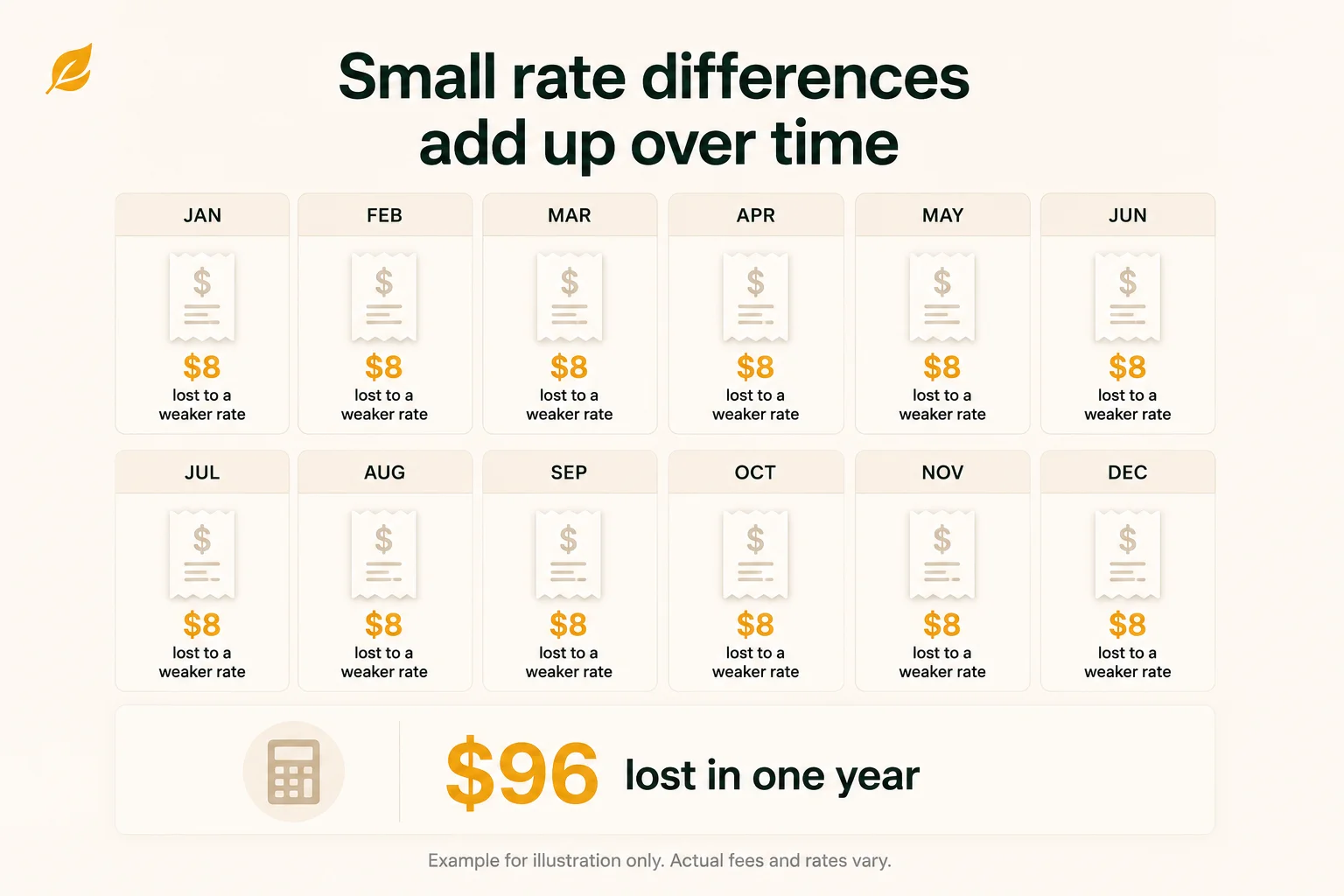
For people who often send money internationally online, currency conversion fees matter a lot. A small rate difference may not feel serious at first. But if someone sends money every month, the cost adds up. If a person loses $8 each month due to a lower rate, that is $96 in one year. That money could have stayed with the family.
For many people, sending money abroad is not a casual payment. It is rent, food, medicine, school fees, or support for parents. When fees and exchange rates are unclear, people lose money without always knowing why.
What to check before sending or spending across borders
Before you pay or send, slow down for a moment. Check the fee, the exchange rate, and the final amount. If there is a payout method, ATM withdrawal, or cash-out step, check whether that adds another cost.
The Consumer Financial Protection Bureau says remittance providers must disclose fees, the exchange rate, certain fees charged by agents or other institutions, and the amount expected to be delivered. That is the kind of clarity people deserve in every cross-border payment.
Conclusion
Currency conversion fees are frustrating because they often sit between the lines. They may not look like a fee at all. They may show up as a lower rate, a checkout option, an ATM prompt, or a final amount lower than expected.
For anyone who sends, spends, or receives money across borders, that matters. The goal is to avoid costs that are unclear, unfair, or easy to miss.
A better system should show people the price before they pay. The fee, the rate, and the final amount should be clear from the start.
Get PureFi for money transfers
PureFi helps you send money abroad for less, with clear fees and a simple way to hold and grow your money. We use new technology to make cross-border transfers faster, fairer, and more transparent.
Learn more about how PureFi can help you send, save, and grow money across borders, or download the app to get started today.