Sending money to Brazil can help you support family, pay for education, cover an emergency, or settle a personal expense. You may also need to pay a freelancer, contractor, or service provider based in the country.
The process is usually straightforward when you have the recipient’s correct details and use a provider that supports payments in Brazilian reais.
Brazil’s official currency is the Brazilian real, shown as BRL or R$. When you send another currency, such as US dollars, euros, or pounds, the payment is normally converted into reais before it reaches the recipient.
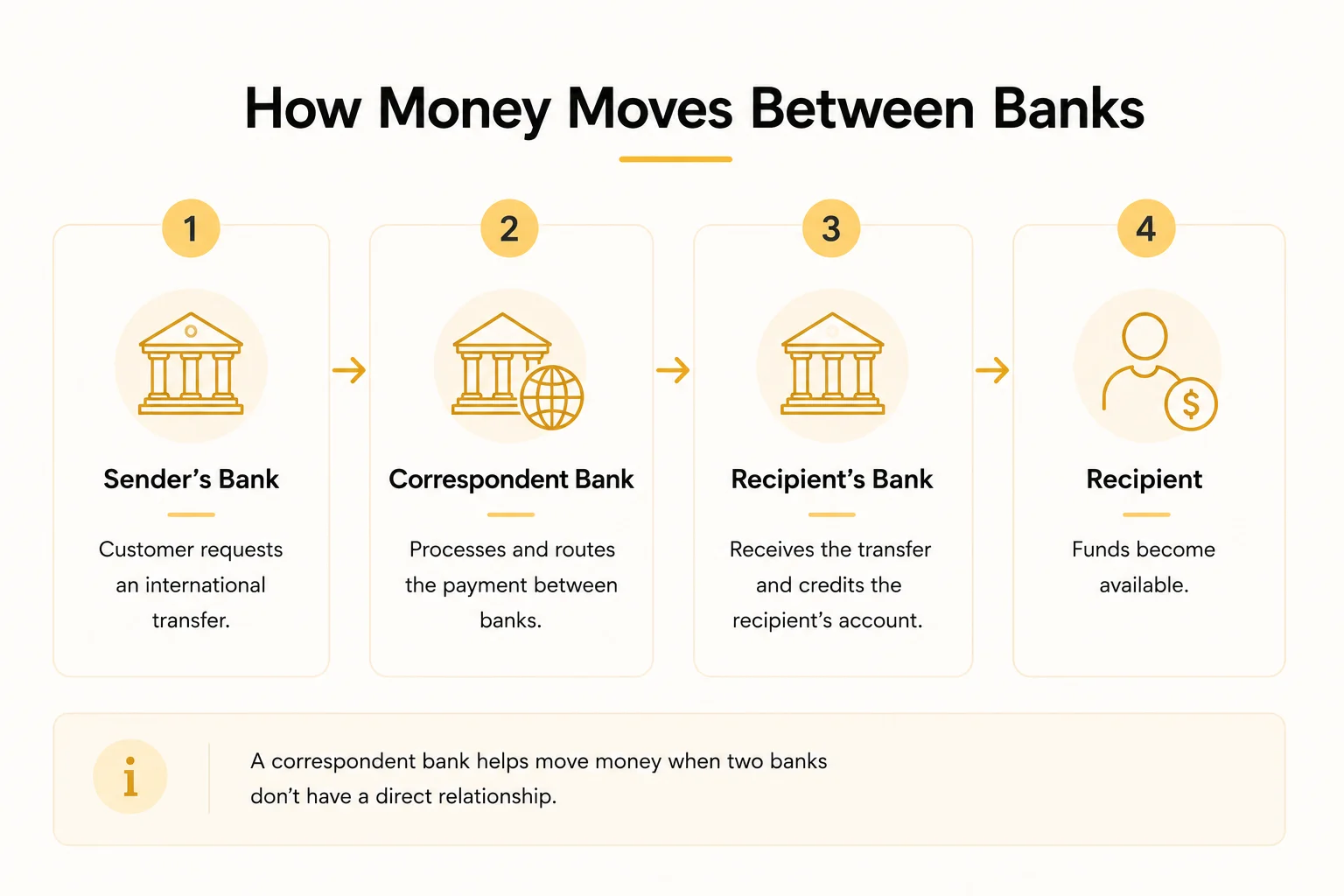
International payments into Brazil must pass through an authorized foreign exchange provider. The Central Bank of Brazil explains that the money does not pass through the central bank itself. Instead, the transfer takes place between the overseas provider and an authorized financial institution in Brazil. (Banco Central do Brasil)
This guide explains how to send money to Brazil, what information you need, how the recipient can receive it, and which costs to check before confirming the transfer.
What do you need to send money to Brazil?
The information you need depends on the provider and receiving method. A bank deposit requires different details from a cash collection or a digital account transfer.
In most cases, you need the recipient’s:
- Full legal name
- Brazilian address
- Phone number or email address
- Bank or payment account information
- CPF number, when required
- Reason for the payment
- Currency and transfer amount
The recipient’s name should match the name registered with their bank or payment provider. Even a small spelling difference can delay an international money transfer or trigger additional checks.
Recipient’s CPF number
CPF stands for Cadastro de Pessoas Físicas. It is Brazil’s individual taxpayer identification number.
Banks and payment institutions commonly use a CPF to identify account holders and process financial transactions. The number is available to Brazilian citizens and eligible foreign nationals. (Serviços e Informações do Brasil)
Some transfer providers ask for the recipient’s CPF before accepting a payment to Brazil. Others request it only for certain amounts, payment types, or account routes.
Ask the recipient to copy the number directly from their official records. Do not guess or enter another person’s CPF.
Brazilian bank details
For a bank deposit, you may need:
- Bank name
- Bank code
- Branch number
- Account number
- Account type
- Recipient’s legal name
- CPF number
Brazilian banking details are formatted differently from account details in the US or Europe. The recipient should copy the information from their banking app or official statement instead of typing it from memory.
Reason for the transfer
A provider can ask why you are sending the money. Common reasons include family support, education, medical expenses, personal savings, rent, services, or a gift. Enter the real purpose of the payment. The receiving institution can request supporting documents when it needs more information about the source or purpose of the funds.
Brazil’s central bank does not set a fixed document list for every foreign exchange transaction. The authorized institution decides which documents are needed based on the payment. (Banco Central do Brasil)
Ways to send money to someone in Brazil
There are several ways to transfer money overseas to Brazil. The right option depends on how quickly the recipient needs the funds, whether they have a bank account, and what the transfer costs.
Send money to a Brazilian bank account
A direct bank deposit is often the simplest option when the recipient has an active Brazilian account. You enter the recipient’s bank details, choose the amount, review the exchange rate, and confirm the transfer. The receiving institution then credits the funds in Brazilian reais.
This method works well for larger payments and regular family support because the recipient does not need to visit a collection point. They can access the money through their normal bank account.
Before sending, confirm that:
- The account is active
- The account belongs to the recipient
- The name and CPF are correct
- The bank accepts international payments
- You have selected the correct account type
Sending directly to an account can also make the transaction easier to track. However, the transfer can take longer when the provider or receiving bank needs additional information.
Send money to a digital payment account
Brazil has a large digital payment market, and many people use payment accounts instead of relying only on traditional banks.
A payment account can be opened through a bank or payment institution and used to store funds, make transfers, pay bills, use cards, and access Pix. The Central Bank of Brazil explains that these accounts can be offered by both financial institutions and payment institutions.
When a provider supports this receiving method, you can send the money to an eligible digital account linked to the recipient. The recipient’s account must remain active and properly identified. A digital account does not remove local identity or financial checks.
Send money for cash collection
Cash collection can help when the recipient does not have a bank or payment account.
You send the funds through a provider with supported collection locations in Brazil. The recipient then visits the location and presents the information required to collect the money.
This usually includes:
- Their legal name
- A transfer reference number
- Accepted identification
- The expected payment amount
- The sender’s name
Cash collection is less practical when the recipient cannot travel to the payout location or does not have accepted identification. It can also cost more than a bank deposit. Check the transfer fee, exchange rate, and payout amount before using this method.
Use an international bank transfer
Banks can send money to Brazil through international payment networks. This option can make sense for large or formal payments, particularly when the sender already uses international banking services. However, bank transfers can involve transfer fees, exchange rate margins, and charges from banks involved in the payment route.
Ask whether the quoted amount includes all charges. A payment can pass through more than one financial institution before reaching Brazil, and each institution can apply its own fee.
For smaller personal payments, a digital international money transfer platform is often simpler than arranging a traditional bank wire.
Can you send money to Brazil through Pix?
Pix is Brazil’s instant payment system. It allows users to send and receive Brazilian reais at any time, including weekends and public holidays. Pix is mainly a domestic payment system. A person outside Brazil does not normally send a foreign currency directly through Pix in the same way a Brazilian account holder sends a local payment.
Instead, an international provider processes the foreign-exchange transaction and delivers reais via a supported local route. That local payment can use Pix when the overseas provider works with an eligible institution in Brazil.
Pix participation is open to authorized banks and payment institutions that meet the Central Bank of Brazil’s requirements. (Banco Central do Brasil)
The recipient can give you a Pix key, such as a CPF number, phone number, email address, or random key, only when your transfer provider specifically supports that receiving option. Do not send money to a Pix key without confirming the recipient’s displayed name. Scammers sometimes send incorrect or substituted payment details.
How to send money to Brazil online

You can complete most international transfers through a website or mobile app.
1. Choose a provider that supports Brazil
Start by checking whether the provider offers transfers to Brazil and can deliver the funds in BRL. Look at the available receiving methods. Some providers support bank deposits, while others also offer digital accounts, Pix-linked payouts, or cash collection.
A provider offering a cheap international money transfer should show more than a low transfer fee. It should also show the exchange rate and the final amount the recipient is expected to receive.
2. Create and verify your account
Enter your legal name, contact details, date of birth, and country of residence. You will normally need to complete an identity check before you can send money internationally online. The provider can also ask for information about your payment method or source of funds. This verification protects your account and helps the provider meet financial regulations.
3. Enter the recipient’s information
Add the recipient’s details exactly as they appear on their bank or payment account. For Brazil, this can include their name, CPF number, bank code, branch number, account number, account type, address, and phone number.
Review every field before continuing. Incorrect account details can delay the payment or send it to the wrong account.
4. Choose the amount and currency
Enter how much you want to send or how much the recipient should receive in Brazilian reais. The provider should show:
- Your sending amount
- The exchange rate
- The transfer fee
- Any known taxes or charges
- The expected amount in BRL
- The estimated delivery time
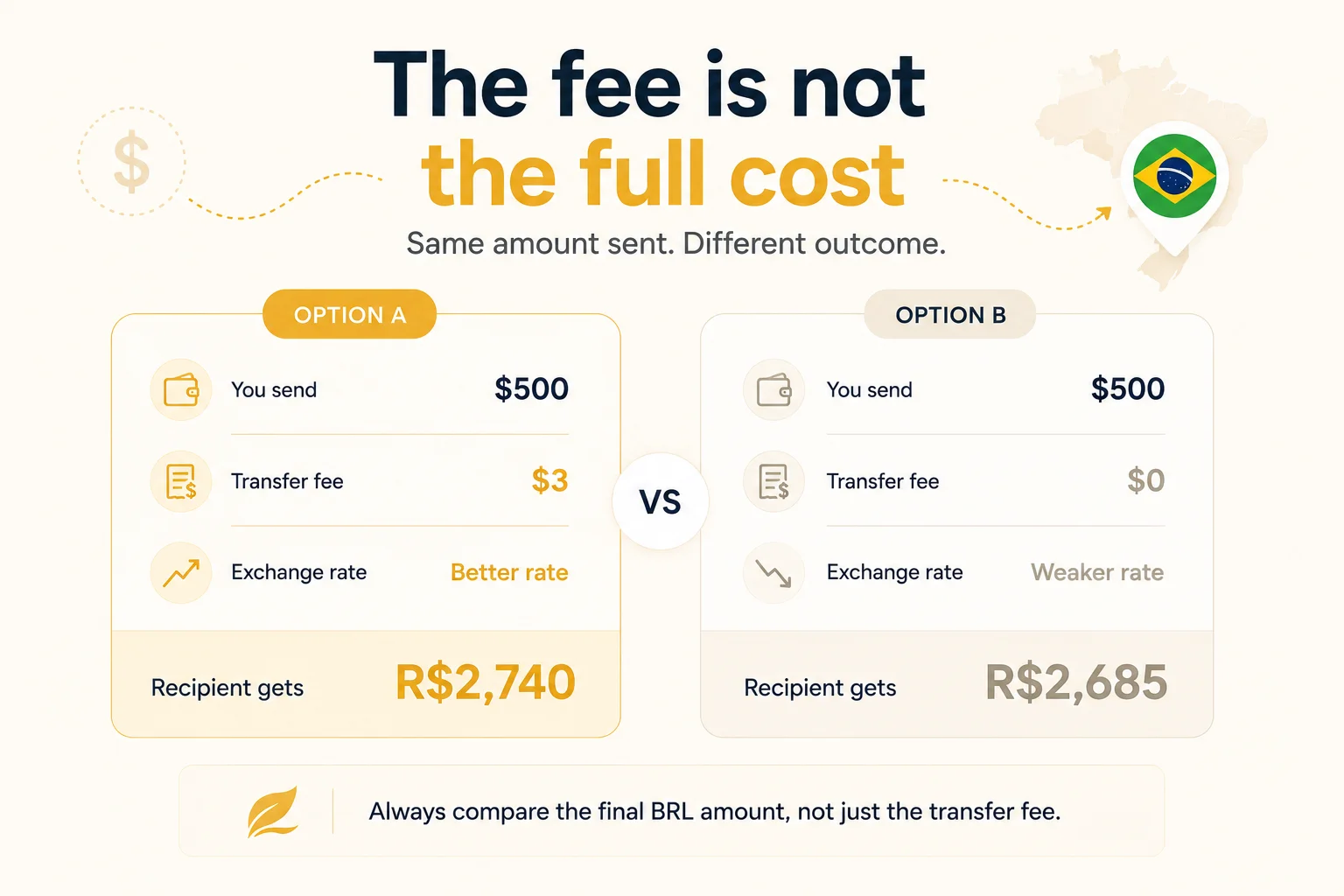
Comparing the BRL payout is more useful than comparing the transfer fee alone.
5. Select a payment method
Depending on the provider and your location, you can fund the transfer through a bank account, debit card, digital balance, or another supported method. Card payments can be faster but often cost more. Bank payments can have lower fees but take longer to clear. Choose the method based on the full cost and delivery estimate, not only speed.
6. Confirm and track the payment
Check the recipient’s details, rate, fee, and expected payout one final time. After confirming the payment, save the receipt and tracking information. Share the transfer reference with the recipient when they need it to follow or collect the payment. A reliable provider should let you check the transfer status until the funds arrive.
How much does it cost to send money to Brazil?
The cost of an international remittance to Brazil typically comprises multiple components.
Transfer fee
This is the visible fee charged for processing the payment. It can be a fixed amount, a percentage, or a combination of both. A low transfer fee does not always mean the overall payment is cheaper.
Exchange rate margin
The exchange rate determines how many Brazilian reais the recipient receives. Some providers use the market exchange rate and charge a clear fee. Others add a margin to the rate, which means the recipient gets fewer reais. Always compare the rate with the expected BRL payout.
Payment method fee
Funding a transfer with a card can cost more than paying from a bank account. The provider can also set different fees for debit cards, credit cards, online banking, or digital balances.
Receiving and intermediary charges
Another bank involved in the transfer can deduct a fee before the funds arrive. The receiving institution in Brazil can also apply a charge. The Central Bank of Brazil notes that fees can be charged in both the sending and receiving countries. Customers should ask the provider about these charges in advance.
Taxes and foreign exchange costs
Brazilian foreign exchange transactions can involve taxes and regulatory costs depending on the payment type and current rules. When comparing providers, look at the total effective cost rather than focusing on one fee. The safest way to transfer money is through a regulated service that clearly shows the rate, charges, and expected recipient amount before confirmation.
What local banking rules apply in Brazil?
International funds do not enter Brazil as a simple domestic payment. The transaction must go through an institution permitted to operate in the foreign exchange market. The overseas provider sends the payment through its Brazilian partner or another authorized financial institution. That institution handles the foreign exchange side and delivers the local funds to the recipient. (Banco Central do Brasil)
The recipient can be asked for:
- A valid CPF
- Updated account information
- Proof of identity
- The reason for the transfer
- Documents supporting the payment
- Information about the sender or source of funds
The exact request depends on the institution and transaction. A small family payment will not always require the same documents as a large property, investment, or business transfer. Brazilian banks and payment institutions also need to keep customer records up to date. A payment can be held until the recipient updates expired or incomplete account information.
Before you send money abroad, ask the recipient to verify that their CPF, phone number, bank details, and account information are correct.
Send money to Brazil with PureFi
PureFi helps users manage supported cross border payments through a digital transfer experience. You can review the exchange rate, the expected recipient amount, and the payment details before confirming the transfer.
To check how to send money to someone in Brazil with PureFi:
- Open PureFi’s send money page or app.
- Create your account and complete identity verification.
- Select Brazil when the route is available for your account.
- Enter the amount and recipient’s details.
- Choose an available receiving method.
- Review the fee, exchange rate, and expected payout.
- Confirm the transfer and track its progress online.
PureFi currently supports direct bank deposits through available routes. Receiving methods, supported countries, and available services depend on your location and account eligibility.
Learn more about how PureFi can help you send, save, and grow money across borders, or download the app to get started today.