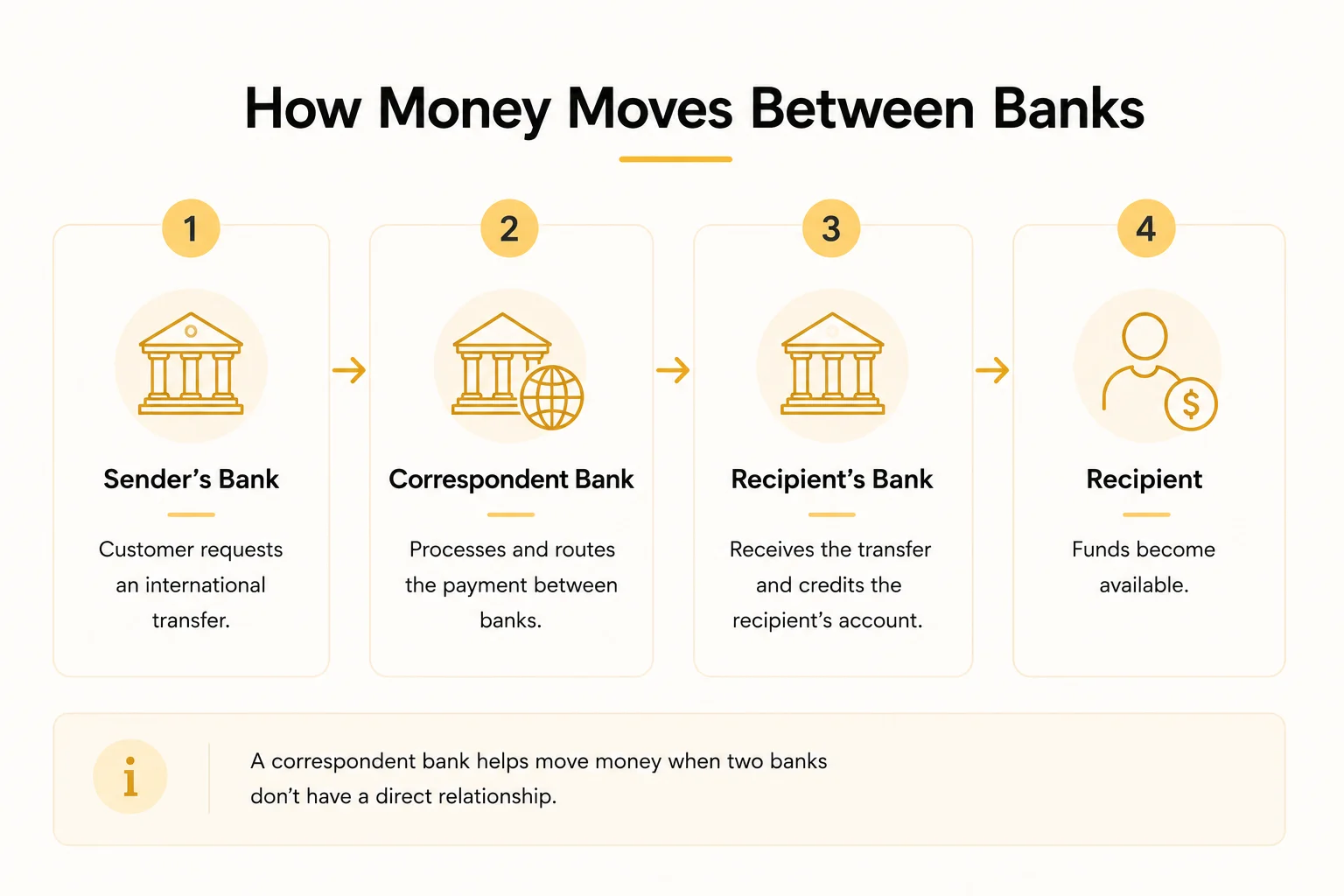
Millions of people in the United States send money to family and friends living in other countries every year. Some send money every month to help with rent or groceries. Others pay for school fees, medical bills, or support relatives during emergencies.
Before sending an international remittance, most people want answers to a few simple questions. How much will the transfer cost? What exchange rate will be used? How much money will the other person actually receive? If something goes wrong, who is responsible?
Today, many banks and international money transfer platforms must answer those questions before your money is sent. They do this because of the Remittance Transfer Rule.
The rule gives consumers more information before they confirm a transfer and offers protection if certain problems happen after the money has been sent. It helps people compare providers, understand the total cost of a transfer, and make better decisions when they send money internationally online.
What is the Remittance Transfer Rule?
The Remittance Transfer Rule is a U.S. law that protects people who send money from the United States to another country for personal reasons.
If a bank or money transfer company is covered by the rule, it must tell you important details before you approve the transfer. This includes the fees you’ll pay, the exchange rate being used, when the money is expected to arrive, and how much the recipient should receive.
After the transfer is complete, the provider must also give you a receipt with the same information. The rule also explains what happens if there is a mistake. If the wrong amount is sent, the money doesn’t arrive as expected, or another qualifying error occurs, you have the right to contact the provider and ask them to investigate.
The Remittance Transfer Rule is part of Regulation E, which comes under the Electronic Fund Transfer Act (EFTA). It is enforced by the Consumer Financial Protection Bureau (CFPB).
The goal is simple. People should know what they’re paying before they send an international remittance, and they should have clear rights if something goes wrong.
Why was the Remittance Transfer Rule introduced?
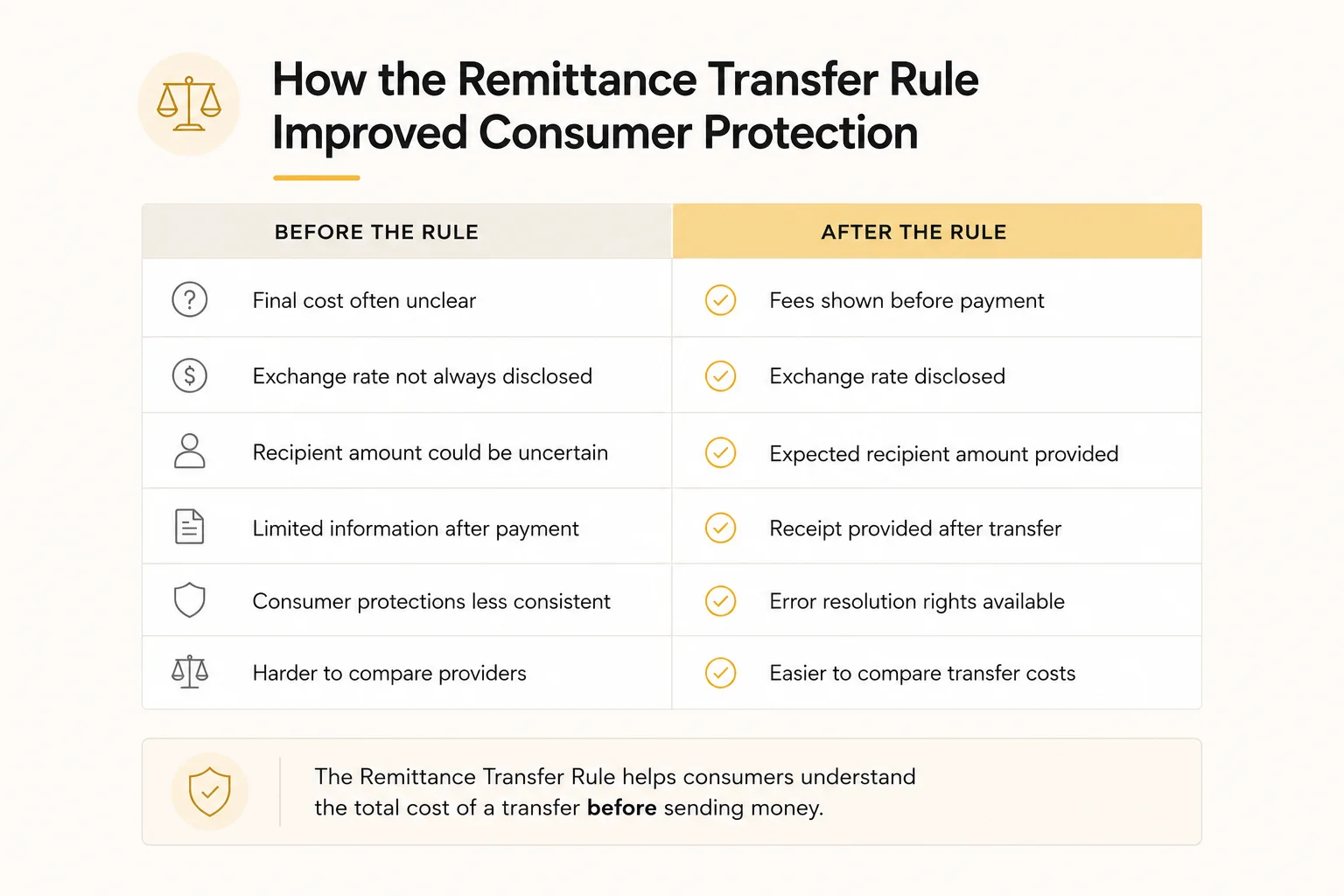
Sending money to another country wasn’t always as clear as it is today. In the past, many people only found out the full cost of a transfer after the money had already been sent. A provider might advertise a low transfer fee, but the exchange rate or other charges could reduce the amount the recipient actually receives.
This made it difficult to compare providers. Two companies could charge the same fee but deliver different amounts because they used different exchange rates or applied extra charges during the transfer.
The Remittance Transfer Rule was introduced to make these cross border payments more transparent. It requires covered providers to share important information before you confirm a transfer, so you know what you’re paying and what the recipient is expected to receive.
Who does the Remittance Transfer Rule apply to?
The Remittance Transfer Rule applies to consumers who send money from the United States to another country for personal, family, or household purposes.
If you’re paying a family member overseas, helping someone with living expenses, or sending money for education or medical costs, your transfer may be covered by the rule. It also applies to many businesses that offer international money transfer services, including:
- Banks
- Credit unions
- Money transfer companies
- Some financial technology providers that offer international remittance services
The rule does not apply to every international payment.
For example, it generally does not cover business or commercial payments. Some providers that only process a small number of qualifying remittance transfers each year may also be exempt from certain requirements.
Whether the rule applies depends on the type of transfer, who is sending the money, and whether the provider is covered by the regulation.
What protections does the Remittance Transfer Rule provide?
The main purpose of the Remittance Transfer Rule is to help you understand exactly what you’re agreeing to before your money is sent. If your transfer is covered, the provider must give you certain information before you complete the payment.
Clear information before you pay
Before you confirm the transfer, you should receive details such as:
- The amount you’re sending
- The transfer fee
- The exchange rate
- Any taxes or other charges that apply
- The amount the recipient is expected to receive
This makes it easier to compare different providers instead of looking only at the advertised transfer fee.
A receipt after the transfer
Once the payment is complete, the provider must give you a receipt confirming the transfer. The receipt includes the key details of the transaction, such as the amount sent, the fees charged, the exchange rate, and the expected delivery date. Keeping this receipt is helpful if you need to ask questions or report a problem later.
The right to cancel
In many cases, you have the right to cancel the transfer within 30 minutes of making the payment, as long as the money has not already been collected or deposited by the recipient. If you cancel within the allowed time, the provider must generally refund your money.
Protection if something goes wrong
Mistakes can happen. The wrong amount could be sent, the money could be delayed because of an error, or it could be delivered to the wrong account.
If you report a qualifying error within the required time, the provider must investigate the issue. Depending on the outcome, they may correct the transfer or refund the money if the rule requires it. These protections help consumers feel more confident when they send money internationally online through a covered provider.
What information must a provider give you?
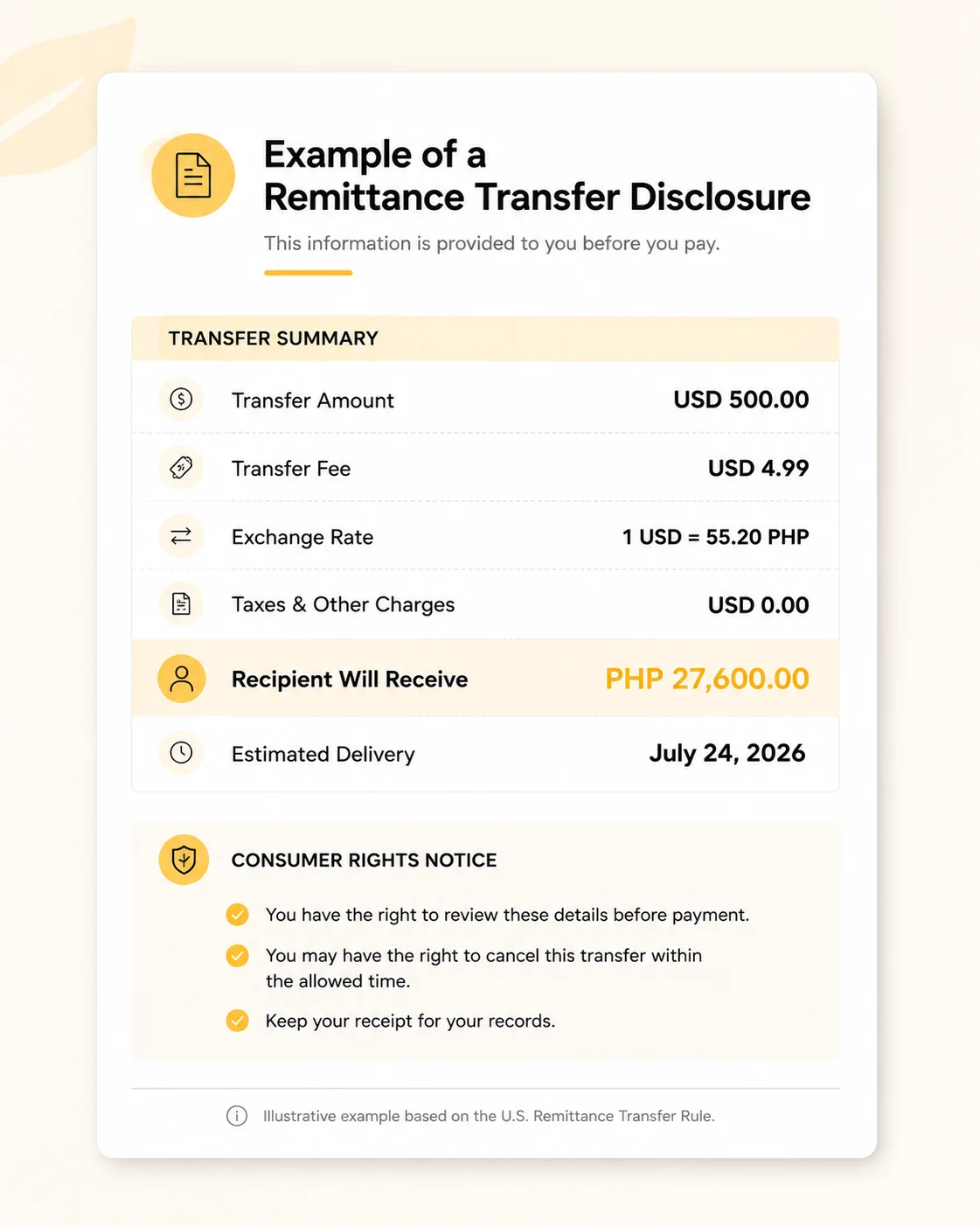
If your transfer is covered by the Remittance Transfer Rule, the provider must tell you certain details before you send the money. This information helps you understand the full cost of the transfer before you decide to go ahead. It also makes it easier to compare one provider with another.
After you complete the transfer, the provider must also provide you with a receipt containing these details. If something doesn’t look right, you can compare the receipt with the information you were shown before making the payment.
When does the Remittance Transfer Rule not apply?
The rule doesn’t cover every international payment. It mainly applies when a consumer sends money from the United States for personal, family, or household reasons.
For example, if you’re sending money to support your parents overseas or paying your child’s university fees, the transfer may be covered. Some transfers are outside the scope of the rule.
Business payments are generally not covered. The same applies to some providers that handle only a small number of qualifying remittance transfers each year.
Even if a transfer isn’t covered by the Remittance Transfer Rule, it’s still worth choosing an international money transfer platform that clearly shows its fees, exchange rates, and delivery times before you send the money.
Not every money transfer provider is covered by the Remittance Transfer Rule, and whether the rule applies depends on the provider and the type of transfer. Regardless of legal requirements, many providers choose to show key pricing information before you send money.
Why transparent pricing matters
Understanding the cost of an international remittance shouldn’t be difficult. Before you send money, you should know how much you’re paying, the exchange rate being used, and how much the recipient is expected to receive.
That’s the approach PureFi is building towards.
PureFi aims to make cross border payments simpler by showing key transfer details upfront, so there are fewer surprises along the way. Depending on the service and country, users will be able to review the transfer amount, fees, exchange rate, and expected delivery before confirming the payment.
Learn more about how PureFi can help you send, save, and grow money across borders, or download the app to get started today.