A pension is money set aside to support you after you stop working. It may come from the government, an employer, a private retirement plan, or a mix of these sources. You may receive it as regular income, a lump sum, or both, depending on the plan.
Pension funds hold trillions of dollars in retirement savings across OECD countries, underscoring the importance of pensions to the global financial system. At the same time, more people are retiring abroad or spending part of their retirement in another country.
This guide explains how to transfer your pension safely, what to check before you begin, and when receiving regular payments abroad may make more sense.
What does transferring a pension overseas mean?
The phrase “transfer your pension” can describe two separate processes.
The first is receiving your pension income in another country. Your pension stays with its current provider, but the provider sends your regular payments to an account abroad.
The second is transferring the value of your pension into a retirement plan based in another country. This changes where the pension is held and may also change the rules, fees, protections, and tax treatment that apply. It is important to know which one you need before contacting a provider.
Receiving pension payments abroad
You may leave your pension with its original provider and ask for payments to be sent overseas when they become due. This is often the simpler option. You keep the pension under its current rules while arranging receiving money from abroad through a supported account.
However, your payment may be affected by transfer charges, bank deductions, exchange rates, and local taxes. Some providers may also ask you to confirm your address or prove that you are still eligible for the pension.
Transferring the full pension fund
A full pension transfer means sending the pension’s value to another approved retirement plan. This is more complex because the receiving plan must normally meet legal requirements. The transfer may also cause you to lose guarantees, survivor benefits, inflation increases, or other features linked to your existing pension.
Once a transfer is complete, it may not be possible to reverse it. That is why a full transfer needs more care than simply arranging overseas payments.
Can you transfer a pension to another country?
Sometimes, but not every pension can be transferred. The answer depends on the country where the pension was built, the type of pension you have, and the rules of the receiving plan. Government pensions, workplace pensions, personal plans, and defined-benefit pensions may follow different processes.
For example, a UK pension can only be transferred overseas without being treated as an unauthorized payment if the receiving plan meets the required rules. A qualifying plan is known as a QROPS, or a qualifying recognized overseas pension scheme. In some cases, a transfer to a QROPS may face a 25% overseas transfer charge.
Other countries have their own systems. A plan that qualifies in one country may not qualify in another. Before doing anything, ask your pension provider whether overseas transfers are allowed and what conditions apply.
Should you transfer your pension or receive payments abroad?
A full transfer may sound easier because your pension would be based in the country where you live. But it is not always the better choice.
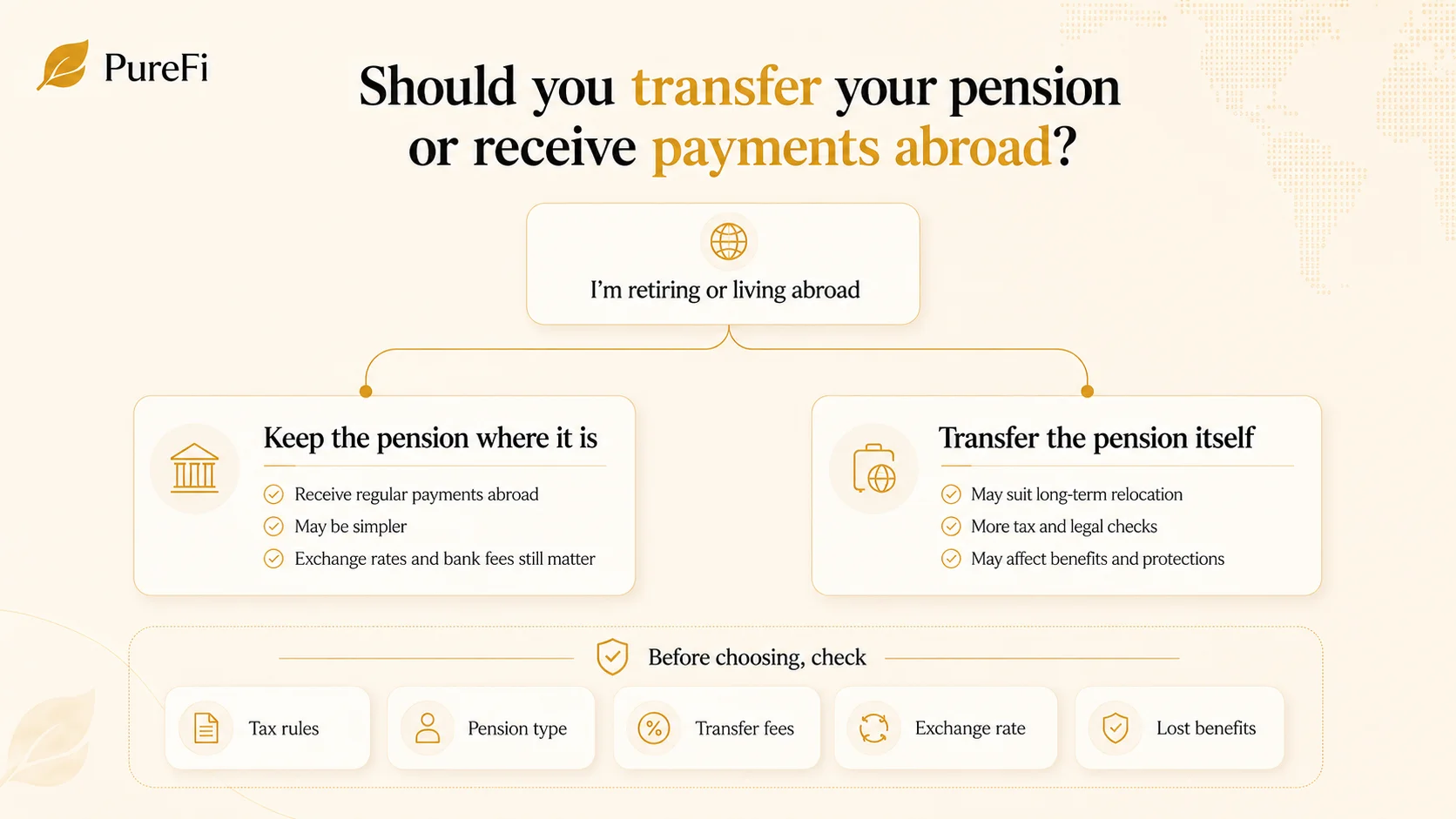
For many people, keeping the original pension and receiving regular payments overseas is simpler. Others may benefit from combining retirement plans or transferring to a suitable plan in their new country.
The right choice depends on your pension benefits, taxes, fees, currency needs, and long-term plans.
What should you check before transferring your pension?
Pension transfers involve more than choosing an account and completing a form. You need to understand the pension you already have and the rules that apply in both countries.
Confirm what type of pension you have
Start by asking your provider for a clear description of your pension. A state pension, a workplace pension, a personal pension, and a defined benefit pension are not the same. Some give you a fixed income. Others depend on how much was paid in and how the funds performed.
Ask whether your pension includes guaranteed income, survivor payments, inflation protection, or early retirement benefits. These features may be difficult or impossible to replace.
Check whether the receiving plan is approved
Do not assume that an overseas plan is suitable because an adviser or company says it is. Check the receiving plan through the official regulator or government register. Use contact details from an official website rather than relying only on information sent by an adviser.
Understand the tax rules in both countries
A pension transfer may be taxed in the country where the pension was built, the country where you live, or both.
Tax treaties can sometimes change how pension income is treated. For example, the IRS states that foreign pension and annuity income may be fully or partly taxable in the US, even when no US tax form is issued for that income.
You should not assume that an overseas transfer is tax-free. Ask a qualified professional who understands the rules in both countries.
Check what benefits you may lose
Some pensions include benefits that do not have a simple cash value. A defined benefit pension may promise income for the rest of your life. It may also continue payments to a spouse after your death or increase payments as prices rise.
A transferred pension may not provide the same protection. Ask for a written list of the benefits you would lose before agreeing to anything.
Review the exchange rate and payment route
If your pension will be paid in a different currency, the exchange rate can affect how much you receive each month.
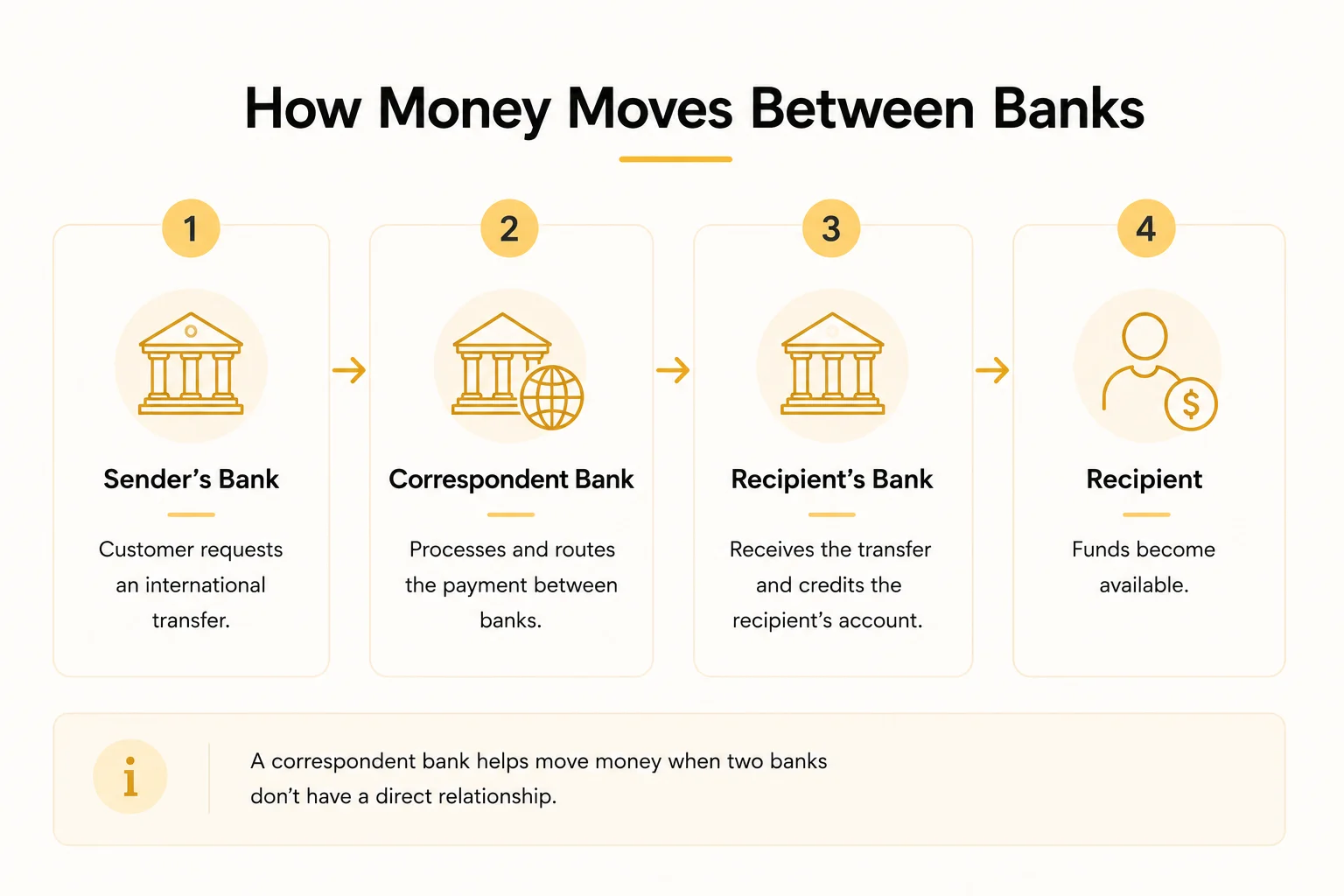
Ask whether the provider converts the payment, whether the receiving bank handles the exchange, and whether intermediary banks are involved. These details can affect the total cost of cross-border payments.
A foreign exchange account may let you receive the pension in its original currency and decide when to convert it, depending on the provider and local rules.
How to transfer your pension step by step
The process will vary, but most international pension transfers follow a similar path.
1. Contact your current pension provider
Ask whether your pension can be transferred overseas. Request the current transfer value, a list of benefits, any exit fees, and all forms needed to begin. You should also ask how long the quoted value will remain valid.
2. Confirm the rules in the destination country
Check whether the country where you live accepts overseas pension transfers and which types of plans can receive them. You may need to meet local residency, reporting, or tax rules. Do not rely solely on general online advice, as the rules may differ for your pension type.
3. Speak with qualified professionals
International pension transfers can involve two tax systems and two sets of pension rules. A qualified pension adviser and tax professional can help explain the effect of the transfer. Make sure they are authorized to advise in the countries involved.
4. Compare a transfer with regular overseas payments
Ask for a written comparison of both choices. The comparison should include taxes, transfer fees, monthly payment costs, exchange rates, lost benefits, and the expected retirement income under each option. This can help you see whether a full transfer solves a real problem or simply creates new ones.
5. Use an official provider-to-provider process
Where possible, the pension should be transferred directly between the approved providers.
This reduces the risk of the funds being sent to the wrong account or treated as a personal withdrawal. In the US, for example, direct rollovers can avoid the withholding rules that may apply when an eligible distribution is paid to the individual first.
Never send pension funds to an adviser’s personal account or to account details that you have not verified.
6. Keep complete records
Save every form, transfer quote, approval, email, tax document, and payment confirmation. You may need these records for tax returns or if either provider asks questions later. Keep copies even after the transfer has finished.
How can you receive pension payments abroad?
You may not need to transfer the pension itself. Many providers can send regular payments to an overseas account.
Ask your pension provider whether it can pay directly into your local account. You should also ask which currencies are available and whether the provider charges for overseas payments.
A digital multi-currency account may be useful if it supports the pension currency and is available in your country. It may allow you to hold the payment in its original currency instead of converting it as soon as it arrives.
However, you should check whether the pension provider accepts that account, whether payment limits apply, and what protections the account offers. Some pension authorities may also require proof that you are alive and still eligible for payments. Missing a required form can cause payments to stop, so keep your contact details up to date.
What fees can reduce an overseas pension payment?
An overseas pension payment can lose value at several points. The pension provider may charge an international payment fee. An intermediary bank may take a deduction. The receiving bank may charge for incoming funds. Currency conversion may also include a fee or exchange rate margin.
This is similar to an international remittance, but the payment is linked to retirement income and may continue for many years. Even a small monthly charge can become significant over time.
Ask for a clear breakdown of all likely costs before choosing where to receive your pension.
Can you transfer a pension without paying tax?
Sometimes, but not always. A transfer may avoid an immediate tax charge if it complies with the correct rules and is directed to an approved plan. However, your residency, pension type, destination country, and the receiving scheme can all affect the outcome.
UK transfers to certain overseas schemes may face a 25% charge. US retirement distributions can also create tax or withholding issues if they are not handled as an eligible rollover. Get tax advice before approving the transfer, not after the funds have been sent.
How PureFi can help with pension payments abroad

PureFi doesn’t transfer pension plans or provide pension, tax, or legal advice. But it can help with one practical part of retiring across borders: receiving and managing supported pension payments after they’re sent.
Depending on availability in your country, PureFi can help you:
Receive money from overseas: Use PureFi to receive supported international payments without relying on a long chain of traditional bank transfers.
Hold dollar-linked value: Where available, you may be able to keep funds in digital-dollar form instead of converting them immediately. Digital-dollar balances are not bank deposits and are not covered by deposit insurance. Availability depends on your country and applicable regulations.
Send money abroad: Transfer part of your pension income to family or another supported country with the cost shown before you confirm.
See fees more clearly: Check the transfer fee, exchange rate, and final amount before sending, so you understand what the payment really costs.
Manage money across borders: Keep cross-border payments, balances, and transfers in one place instead of using several services.
Learn more about how PureFi can help you send, save, and grow money across borders, or download the app to get started today.