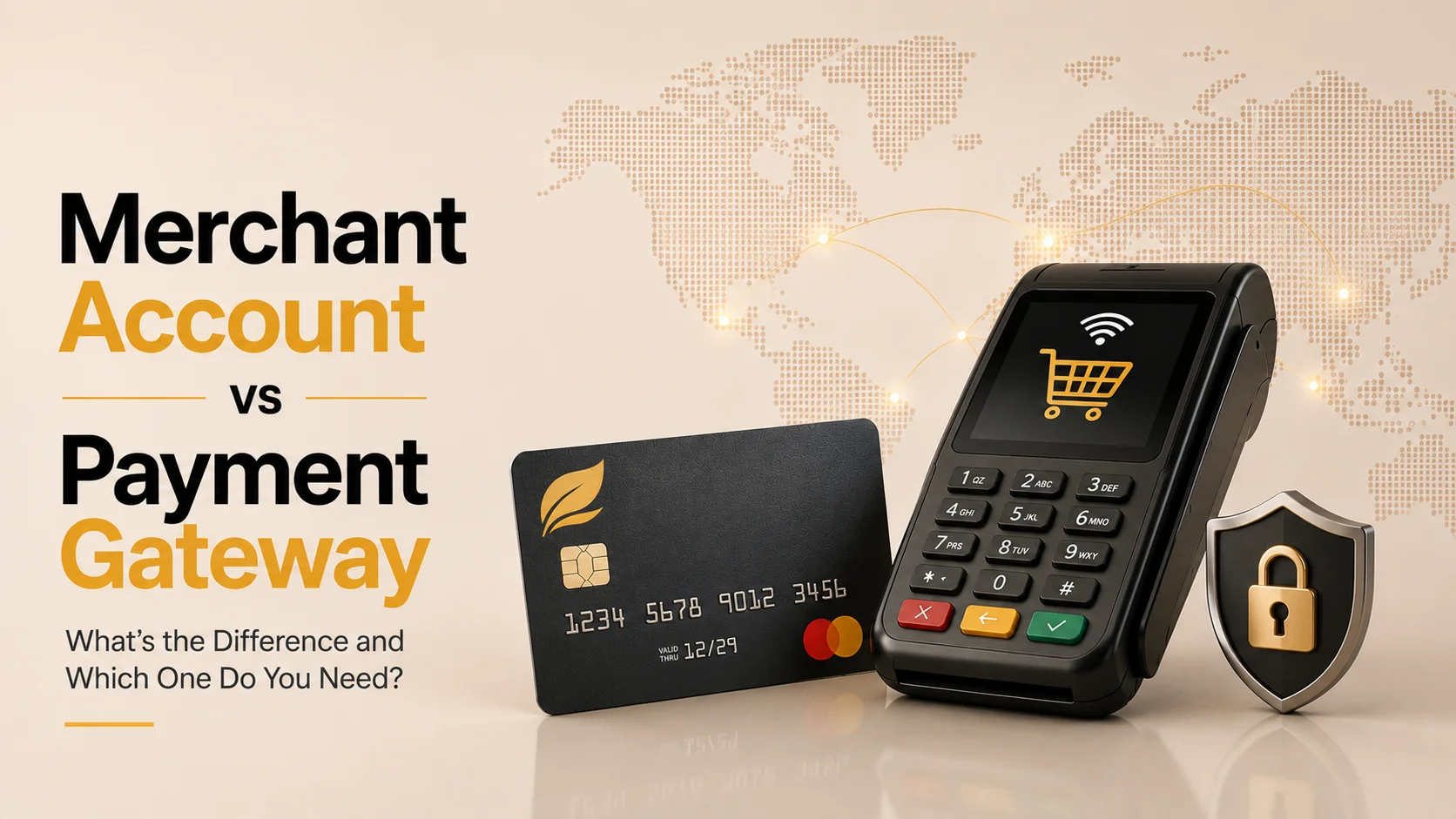
When a customer enters their card details on a website, several systems work in the background before the business receives the money.
The payment details must be collected securely. The transaction must be sent to the customer’s bank for approval. Once approved, the funds must be processed and settled into the business’s regular bank account.
A payment gateway and merchant account handle different parts of this process. Understanding the difference can help you compare providers, understand your fees, and choose a payment setup that fits your business.
What is a merchant account?
A merchant account is a specialized account used during the card payment process. When a customer pays by credit or debit card, the money does not usually go straight into the business’s everyday bank account. Once the payment is approved, the funds are recorded or temporarily held in the merchant account before being settled into the business account.
A merchant account is not the same as a normal business bank account. It is designed specifically to accept and process electronic payments. The business generally cannot use it like a checking account to pay bills or withdraw money.
For example, imagine that a customer pays $100 on an online store. After the payment is approved, the merchant account handles the funds during clearing and settlement. The payment provider later deposits the available amount into the seller’s business account after deducting any agreed fees.
How do you get a merchant account?
A business may get a merchant account through an acquiring bank or a payment service provider. The provider will normally review information about the company before approving the account. This can include the type of products or services sold, expected sales volume, average transaction size, refund policy, operating history, and countries served.
Businesses with a higher risk of refunds, fraud, or chargebacks may face stricter checks, higher fees, or longer settlement periods.
What is a payment gateway?
A payment gateway is the technology that securely collects and sends payment information during a transaction. It serves as the digital connection between the customer’s checkout page and the systems that approve or decline payments.
When customers pay online, they enter their card number, expiry date, and security code into a checkout page. The payment gateway protects this information and sends the transaction data to the payment processor. The processor then communicates with the relevant banks and card networks to request approval.
The customer normally sees the result within seconds. If the payment is approved, the checkout shows a confirmation. If it is declined, the customer may be asked to try another payment method.
A payment gateway handles payment data. It does not normally hold the business’s funds.
Where are payment gateways used?
Payment gateways are commonly used on:
- Ecommerce websites
- Mobile apps
- Subscription platforms
- Online booking systems
- Invoice payment pages
- Digital marketplaces
Some providers also connect online, in-app, and physical point-of-sale payments through the same system.
A gateway may support credit cards, debit cards, digital wallets, bank payments, and local payment methods. The options depend on the provider and the countries where the business operates.
Merchant account vs payment gateway
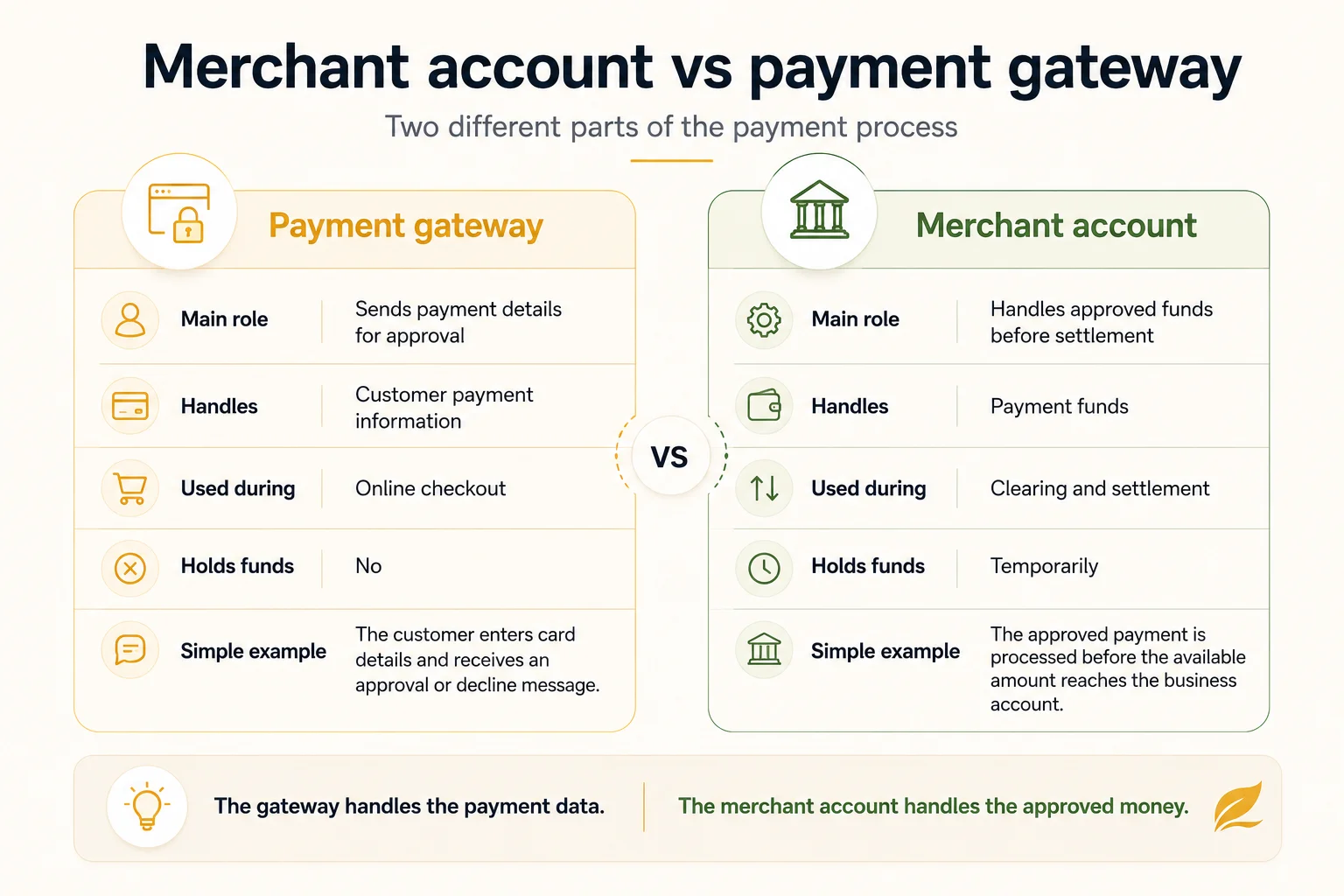
| Feature | Merchant Account | Payment Gateway |
|---|---|---|
| Purpose | Holds approved card payments during processing before settlement | Securely collects and sends payment information for authorization |
| Handles customer payment details | No | Yes |
| Holds funds | Yes, during the settlement process | No |
| Used during | Clearing and settlement | Payment authorization |
| Visible to customers | No | Yes, during checkout |
| Required for card payments | Usually yes (or provided through an all-in-one payment service) | Yes |
| Can be part of one provider | Yes | Yes |
A payment gateway helps start the transaction. The merchant account supports what happens to the approved funds before the business receives them. Neither one replaces the business’s main bank account.
How do merchant accounts and payment gateways work together?
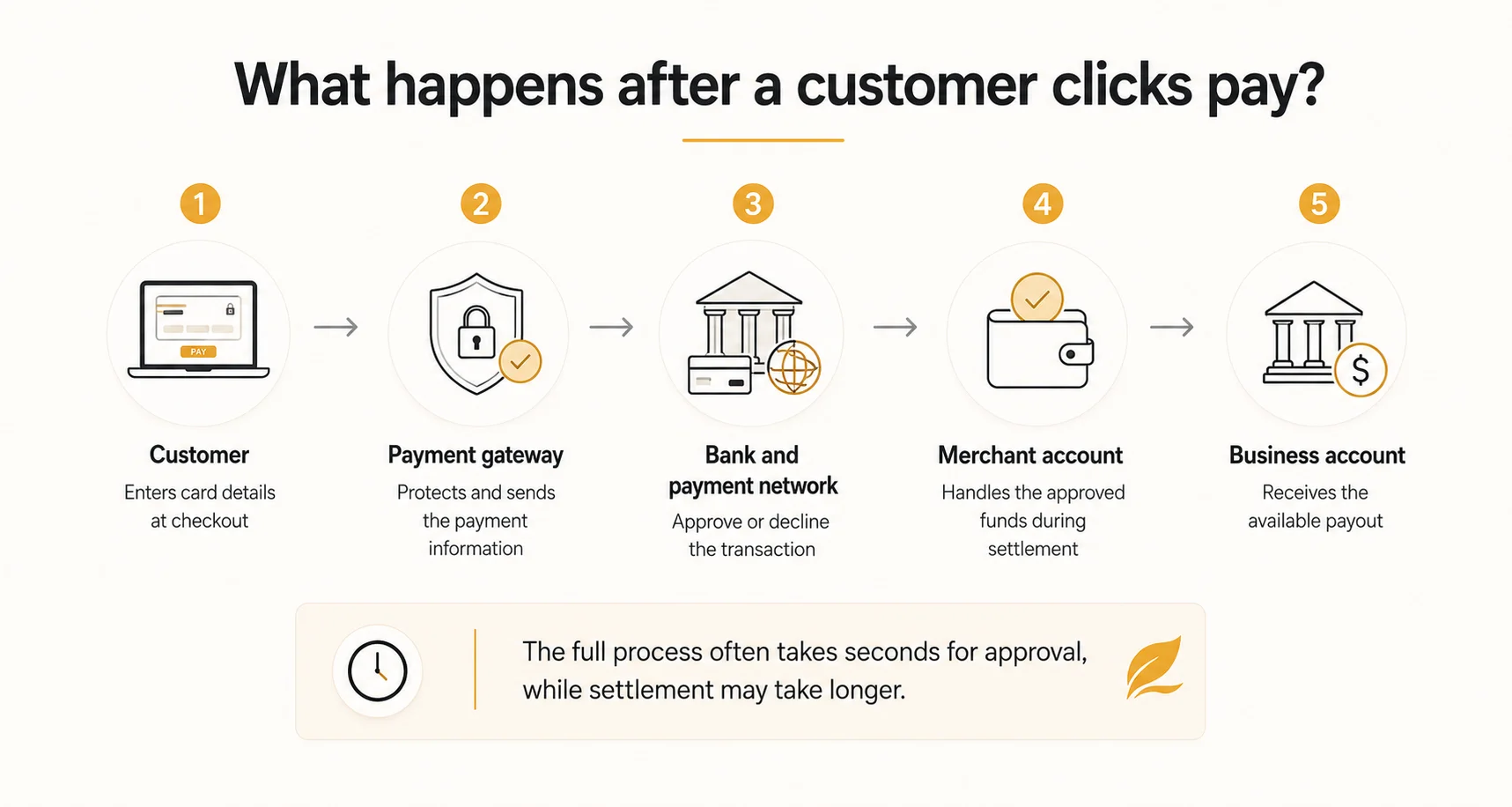
A customer payment usually follows a few basic steps.
1. The customer enters their payment details
The customer chooses a product or service and enters their card information on the business’s website or app. The checkout may be hosted by the payment provider or built directly into the website.
2. The payment gateway protects the information
The gateway encrypts or tokenizes the card details and sends the transaction request to the payment processor. This helps protect sensitive payment information while it travels between systems. Secure gateways may also support authentication and fraud controls.
3. The payment is approved or declined
The payment processor communicates with the card network and the customer’s bank. The bank checks whether the card is valid, whether the customer has enough available funds, and whether the transaction passes its security checks. It then sends an approval or decline message back through the payment system.
4. The customer sees the result
The payment gateway sends the result to the checkout. If the payment is approved, the order can be confirmed. If it is declined, the customer may be asked to use another card or payment method.
5. The approved funds are settled
The approved amount passes through the merchant account process before the available funds are paid out to the business’s regular account. Settlement may happen on the same day or after several business days, depending on the provider, payment method, risk checks, and country. This entire process may involve several organizations, but an all-in-one payment provider can manage much of it through one platform.
Do businesses need both?
A business that wants to receive card payments normally needs both a payment gateway and a merchant account. However, that does not always mean opening two separate accounts or signing contracts with two companies.
A traditional payment setup may involve:
- A merchant account from an acquiring bank
- A payment gateway for the checkout
- A payment processor to handle transaction communication
- A business bank account for the final payout
The best way to receive payment online depends on the business model, sales volume, countries served, payment methods, and technical needs.
Frequently asked questions
Is a merchant account the same as a business bank account?
No. A merchant account is used during the acceptance and settlement of card payments. A regular business bank account is where the company keeps and uses its available money. Funds normally pass through the merchant account process before being paid into the business account.
Can a payment gateway work without a merchant account?
A gateway needs to connect to a payment processing setup that can handle and settle the approved transactions. The business may not need its own separate merchant account if the payment service provider combines merchant account functionality with its gateway and processing services.
Do small businesses need a merchant account?
Small businesses need access to merchant account features to accept electronic card payments. They may get these functions through an all-in-one payment provider rather than applying for a traditional standalone merchant account.
What is an all-in-one payment provider?
An all-in-one payment provider combines several payment functions into a single service. This may include the payment gateway, processing, merchant account access, fraud controls, reporting, and payouts to the business’s bank account.
Can a merchant account receive international payments?
A merchant account may process payments from customers in other countries if the provider supports those locations, currencies, cards, and payment methods. Businesses should check international processing fees, currency conversion charges, and available settlement currencies before trying to receive international payments.
Conclusion
A payment gateway and merchant account help with different parts of the same transaction. The payment gateway securely collects and sends the customer’s payment details. The merchant account handles approved funds during processing and settlement before the money reaches the business’s main account.
Businesses usually need both functions, but they may be offered in a single payment service. That is why it is important to look beyond the name of the provider and understand what the service actually includes.
The right setup should make it easy for customers to pay, show the business the cost of each transaction, and settle funds within a clear timeframe.
Get PureFi for money transfers
PureFi helps you send money abroad for less, with clear fees and a simple way to hold and grow your money. We use new technology to make cross-border transfers faster, fairer, and more transparent.
Learn more about how PureFi can help you send, save, and grow money across borders, or download the app to get started today.